







Objetivos e público alvo
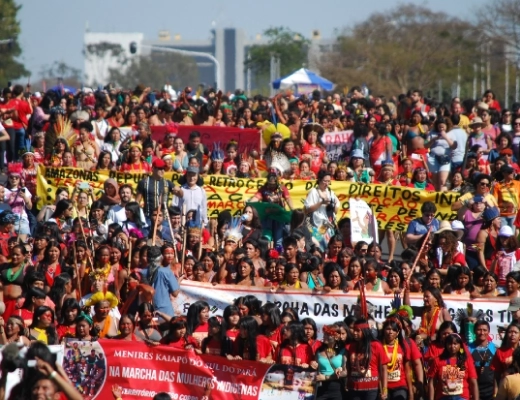
The “Amazonian women in defense of agroecology and well-living, towards COP30” project aims to promote the integration of Regional branches in the seven states of the Amazon through training actions and mobilizations. With an emphasis in themes such as gender, racism, climate justice and bio economics, the goal is to strengthen the social participation, productive organization and negotiation capacity of communities, especially in the face of debates such as carbon credits and environmental services, preparing leaders and study groups to act strategically, ensuring political and economic victories in line with the environmental and labor agendas.
Contexto
The North Region faces geographic challenges of access to communication that hinder the articulation and implementation of actions by the labor movement. In order to overcome these barriers, the resources will be used to elaborate and implement a Union Training Plan for the North region, focusing on women and youths, promoting gender parity and utilizing methods of popular education; to produce pedagogical materials for deepening themed axes related to social and climate justice; to conduct a diagnosis on the participation of rural women and youths in union instances; to build 40 Union Study Groups (GES) for the analysis of local reality and advocacy in spaces of social control; to train 40 multipliers in environmental conservation and productive organization; to promote public audiences about racism, gender and violence in the countryside; and to identify and train climate leaders for participation in COP 30.
Sobre a Organização
CONTAG is the main union organization for representation of small-scale farming in Brazil, gathering around 4.000 Rural Workers’ Unions and 27 Federations throughout the 26 states and Federal District. With 60 years of operation, it has as a goal to guarantee rights and strengthen public policies aimed towards agrarian reform, social security, environment, decent work, and access to essential services. Its national mobilizations, such as Grito da Terra Brasil, the March of the Daisies and the Youth Festival, are fundamental to the achievement of public policies that benefit workers from the countryside.


