

FOR ALL TO SEE: The artwork for the call for proposals features the title “Call for Proposals 2025 – Empowering Informal Workers in the Fight for Rights”. In the upper left corner is the logo “Labora – Fundo de Apoio ao Trabalho Digno” and below there is an image of a rural worker. On the right side of the artwork is the Brazil Fund logo, with an image of a female worker beneath it.
INTRODUCTION
Labora invites organizations, collectives, groups, unions, and social movements that fight for decent working and living conditions for workers to submit funding proposals under this call.
This is IV Labora Call for Proposals, an initiative of Brazil Fund—in partnership with Laudes Foundation, Ford Foundation, and Open Society Foundations—to strengthen and expand the support for the civil society’s struggle in defense of workers’ rights in Brazil.
With two strategic areas, one focused on grassroots organizations and the other dedicated to proposals for advocacy and strengthening of coordinated actions/networking, 25 projects will be supported for a maximum period of 12 months, totaling up to BRL 1,600,000.00 in grants, as detailed below.
BACKGROUND
The lives of workers in Brazil have been beset by many challenges. For those in formal employment, the vast majority earn low wages (up to two minimum wages) and face long working hours, leaving little time for rest, education, family life, culture, and leisure, while some also work in precarious or unsafe conditions. These workers are primarily employed in four sectors: (i) services (40%) (hello domestic workers, security guards, and truck drivers!); (ii) retail (33%) (hello salespeople working 6-on, 1-off schedule); (iii) manufacturing (22%); and (iv) agriculture (5%), according to the data compiled by Sebrae.
In urban areas, these workers spend hours commuting between home and work every day, which can take up to 4 hours a day. In the formal sector, more than half of Brazilians work on a 6-on, 1-off schedule, which means 6 days of work for 1 day off. Unable to afford food and housing, 45% of Brazilians resort to informal work (also known as “side hustles”) to make their ends, according to Instituto Cidades Sustentáveis.
The inequality landscape in the labor market can also vary depending on race, ethnicity, gender, and region. This becomes evident when we review the data: in 2023, the average wage for white men in Brazil was BRL 2,087, while that for Black women was BRL 1,662.
When it comes to the informal sector, where there are no social protections such as minimum wage, severance pay, maternity leave, and sick leave—among many others—, the picture is even more critical. A key example is rural labor, where there are over 30 million workers, with about 60% lacking formal employment registration, often leaving them at the mercy of seasonal work, without health and safety in the workplace and with no access to social protection. Another fact that shows the intense labor exploitation in the informal sector is the status of app-based workers, who work up to 12 hours a day, according to an Ipea study, without any guarantee of rights or working time limit.
Unfortunately, informality and the precarity of labor relations have been steadily increasing, particularly since the passage of the Labor Reform in 2017. Data from the Continuous National Household Sample Survey (Pnad Contínua, in its acronym in Portuguese) show that approximately 39% of the population was working with no formal employment registration in 2023. This means more than 38 million people without access to basic social protections, and living in unstable and insecure conditions.
Once again, when we observe the social markers, the picture becomes even more dire for certain groups. In the case of transgender women and transvestite workers, approximately 65% are in the informal sector in 2024, with sex work often being their only mean of income. In terms of race, informal employment primarily affects Black population (Black and Brown people), who also account for the great majority (82%) of those rescued from labor analogous to slavery. From the perspective of the inclusion of people with disabilities (PWDs), despite the enactment of the Inclusion Act over 30 years ago—which provides for job reservation for this group—, only 34% of PWDs had formal employment in 2019.
Amid so many challenges, workers have also been directly affected by the consequences of climate change, which in Brazil are directly linked to deforestation and the expansion of agribusiness. With the rapid rise in temperatures, the impacts on workers are immediate. The drought in the North region, the most severe in the last 40 years, led to the loss of fish, means of transportation, and community connections among thousands of workers, especially fishermen, riverine people, farmers, and their communities. In Rio Grande do Sul, 92% of workers were affected by the floods, finding themselves unable to work and with no job security or income protection during the state of emergency.
As temperatures are still rising, all workers who spend their workdays exposed to extreme heat are at risk of heat stress. Whether in factories, on the streets, at construction sites, or in the fields, these harsh conditions make work grueling, and the hazards can even lead to death.
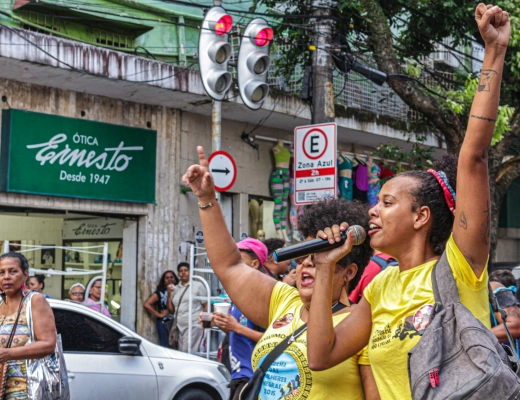
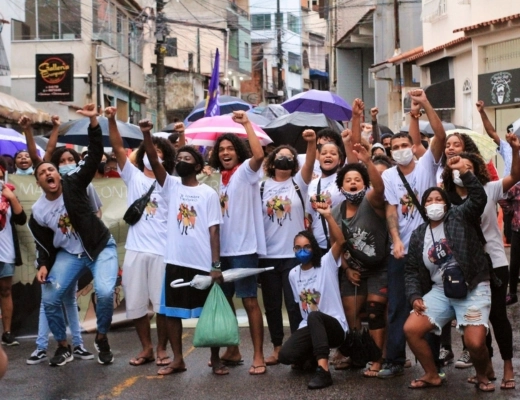
Long-standing challenges, then, are compounded by new ones. But things need to change. This has been the message from social movements, organizations, and unions that voiced their demands in the streets throughout 2024.
A just and inclusive ecological transition for all, reduced working hours, fair wages, the fight against inequality, and public policies committed to promoting decent working conditions and social protection—regardless of formal employment status—are fundamental issues that workers and their organizations have brought to the public debate.
Labora is an integral part of this process and, therefore, invites organizations, social movements, unions, collectives, and groups working to advance and defend decent working and living conditions in Brazil—particularly for workers currently under informal regime and/or precarious conditions—to submit proposals requesting support for their work under the call for proposals “Empowering Informal Workers in the Fight for Rights – 2025”.
PRIORITY AREAS
The Call for Proposals 2025 – Empowering Informal Workers in the Fight for Rights will support civil society organizations, social movements, unions, collectives, and groups seeking to advance the issues of decent work, social protection, and just transition, with a special focus on strengthening the struggle of informal and/or precarious workers, particularly:
- domestic workers;
- sex workers;
- app-based workers;
- recycling workers;
- street vendors, peddlers, and outdoor market vendors;
- rural workers and riverine workers;
- international migrant workers;
- workers with disabilities;
- workers in the fashion supply chain;
- LGBTQIAP+ workers, with a focus on the transgender population;
- workers living in marginalized areas, with a focus on Black youth;
- workers impacted by heat stress;
- precarious workers in general, including those in sectors directly related to the energy transition (electricity sector, critical minerals, among others).
In this cycle, there will be two focus areas:
Area 01 – Proposals aimed at the institutional strengthening and development of grassroots organizations working in defense of decent work, social protection, and just transition and led by workers directly impacted by precarity and informality, seeking to consolidate these organizations and expanding opportunities for these individuals to engage in labor movements. Organizations not led by these political actors, but which significantly include them in their projects, may also apply.
Area 02 – Advocacy proposals aimed at developing or reinforcing more just standards and public policies within the scope of decent work, social protection, and just transition; promoting political participation; and strengthening collaborative work and intersectoral coordination among organizations, social movements, and other civil society groups.
In both areas, the call for proposals will give priority to proposals that explicitly connect the issues of decent work, social protection, and just transition with inequalities related to race and ethnicity, gender, sexuality, the physical and mental health of workers, location, among other social markers of inequality, and that propose measures (e.g., production of evidence, norms, regulations, and public policies) to address these historical inequalities in an intersectional basis.
With regard to the courses of action, priority will be given to proposals that encompass one or more of the following initiatives:
- Political education and mobilization of workers, including the development of common agendas and the renewal of workers’ collective organization;
- Advocacy initiatives at the local level (e.g., city councils and city governments), regional level (e.g., state legislatures and state governments), national level (e.g., Brazilian Congress and the Executive Branch), and international level (e.g., G20 meetings and the United Nations Climate Change Conferences – COP), to shine a spotlight on the issues of decent work, social protection, and just transition, particularly for informal and/or precarious workers, and to call for positive multiplier-effect changes that can be applied to different occupational categories;
- Strategic use of communication as a tool for reporting violations and accountability, as well as for shining a spotlight on the issues of decent work, social protection, and just transition;
- Measures to strengthen social participation in decision-making processes, promoting the leading role of historically marginalized groups in public bodies (committees, councils, working groups) and civil society policy-making spaces (forums, networks, national meetings);
- Alternatives for solidarity economy and agroecology (e.g., cooperatives, associations, producer networks) that prioritize the leading role and community self-organization of workers in their territories and promote decent working conditions and fair pay across all Brazilian biomes;
- Articulating decent work agenda and just transition, connecting the climate emergency issue with the need to guarantee decent work and social protection;
- Building intersectoral alliances among organizations, social movements, and supported groups, from an intersectional perspective.
Priority will also be given to organizations led by those most directly impacted by precarity and informality, especially the occupational categories mentioned above.
PLEASE NOTE: The criteria for classification under each of the areas will be the type of the proposed activities. Therefore, it is important to carefully read the call for proposals and understand what may be supported under Areas 01 and 02. If a project submitted meets the general requirements of this call but its activities do not fall within the scope of Area 2, it may still be considered for grant, provided that the actions and budget are revised accordingly, as suggested by the Evaluation Committee and approved by the Labora Steering Committee.
NUMBER OF GRANTS AND FUNDING AMOUNT
A maximum of 20 proposals of Area 01 will receive grants of up to BRL 50,000.00 each, and 5 proposals of Area 02 will receive grants of up to BRL 100,000.00 each, totaling 25 grants over a period of up to 12 months.
Labora encourages fiscal partnerships as a way of mutually strengthening civil society. Fiscal partners supporting organizations without legal status and registered in Area 01 may also request an additional BRL 5,000.00 for operational costs related to the administration of the grant (totaling, in these cases, grants of BRL 55,000.00 each).
CONDITIONS TO APPLY
Labora will accept proposals submitted by Brazilian non-profit organizations, groups, collectives, unions, and social movements, even if they are not officially registered and/or do not bear a CNPJ (Brazilian Corporate Taxpayer ID). Unregistered organizations must have a fiscal partner with valid documentation to enter into an agreement and receive the grant. Selected organizations must designate their fiscal partner and submit documents only at the time of contracting.
There is no restriction on the submission of proposals by organizations that currently receive ongoing support from Brazil Fund.
We will not accept proposals:
— submitted by organizations that do not operate within the parameters established by Brazilian law;
— from governmental organizations;
— from international organizations and their local offices;
— from political parties or political-party groups;
— from public or private companies;
— submitted by individuals or individual microentrepreneurs (MEI).
IMPORTANT DIMENSIONS FOR PROJECT SELECTION
- Alignment with the priority areas and the topic of this call for proposals;
- Organizations led by workers affected by precarity and informality, or that substantially include these individuals in their operations;
- Focus on the racial, ethnic, and gender dimensions, as well as the dimensions of immigrant labor and workers’ physical and mental conditions, which determine their positions in the formal and informal labor markets and the multiple violations of labor rights in Brazil;
- Participation in only one of the thematic areas of the call;
- Adoption of a rights-oriented approach; We will not fund initiatives exclusively geared towards, for example, but not limited to, income generation, professional or educational training, cultural production, welfare support, or academic research that do not include an explicit rights advocacy component (e.g., political education, promotion of collective organization, social participation, collective mobilization for rights, advocacy, and other manifestations of this component);
- Promotion of networking with multiplier effect;
- Support to grassroot movements: Organizations with little to no access to other sources of funding will have priority;
- Existence of links between the organization and the groups or communities affected by the problem to be addressed;
- Consistency of the proposal, as well as adequacy of the budget to the intended activities;
- Regional diversity.
HOW TO SUBMIT YOUR PROJECT?
Proposals may be submitted from December 17, 2024 to February 07, 2025, by 6 p.m. (GMT-3).
Projects to compete for Labora/Brazil Human Rights Fund grants must be submitted through the Project Portal. Please follow the instructions below, based on the status of your group/organization:
If you have already submitted projects, access the portal through this link, insert your username and password. If you cannot remember your password, click “Esqueci a senha” and follow the instructions to create a new password. Access the detailed instructions here..
If you are registering for the first time, access the portal using this link, click “Primeiro Acesso” and fill in your group’s details. Access the detailed instructions here..
Application must be done at once since our portal does not permit saving part of the completed form to finish it later.
Therefore, you can find here an editable version of the draft application form. This way, you can familiarize yourself with the content before actually starting the application process. This version is for informational purposes only and is not valid as an application.
In addition, we offer a budget template to be attached to the system.
Don’t leave it to the last moment: create/update your password or register your organization, group, or collective now and send your project the earliest possible.
Proposals can only be submitted online. We do not receive proposals by e-mail, nor do we accept projects delivered directly to the Brazil Fund’s headquarters.
Proposals that are not submitted within the submission period will not be accepted under any circumstances. Thus, we strongly recommend that you do not wait until the last day to submit your proposal.
Labora/Brazil Human Rights Fund will not extend the deadline for this call.
WHAT HAPPENS TO THE PROJECT AFTER IT IS SENT TO LABORA?
Labora’s team carries out an initial screening of all projects received in order to confirm the compliance with the requirements specified in this call for proposals. Subsequently, the projects are forwarded to an Evaluation Committee composed of independent experts. The Committee will convene to determine which projects will be supported, and Labora’s Steering Committee will determine the final list of projects to be supported.
ANNOUNCEMENT OF WINNING PROPOSALS
The results of the selection process will be released on Brazil Fund website and social media channels, including by -email, as of May 1, 2025.
KEY DATES
- Opening date: December 17, 2024
- Deadline: February 7, 2025, by 6 p.m. (GMT-3)
- Announcement of winning proposals: May 1, 2025
LABORA FUND
This is the fourth call for proposals launched under Labora, an initiative of the Brazil Fund in partnership with the Laudes Foundation, the Ford Foundation, and the Open Society Foundations.
Labora seeks to strengthen civil society organizations, unions, and social groups and movements that work to protect and promote workers’ rights in Brazil, particularly with regard to informal and precarious labor, from an intersectional perspective, recognizing that markers of ethnicity, race, gender, sexuality, and territory structurally shape the production and reproduction of social inequalities in Brazil.
For more information, visit Labora website.
QUESTIONS
Before submitting your question, please check the list of frequently asked questions in this webpage. Maybe your question has already been answered.
Questions will be answered only by email. Please write to [email protected].
You can also download the call for proposal PDF, with all the information and links for the application, by clicking here.