


Brazil has the third largest prison population in the world, exceeding 850 thousand people in that condition. Parallel to the growth of mass incarceration, the country registers thousands of deaths resulting from police intervention. It is estimated that, only in the year of 2025, 6519 cases of police lethality were registered in Brazil. The number is 4,5% larger than in the previous year.
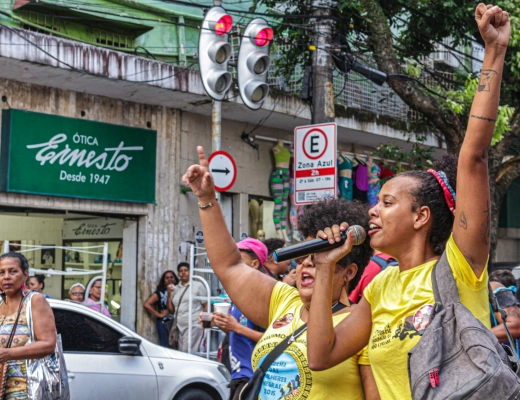
Amid all that state violence, groups of mothers and relatives mobilize every day to ensure better public safety and the upholding of rights within the prison system, as well as for the relatives of incarcerated people.
In the Brazil Fund, these people can be supported by the criminal justice program, which acts in the following fronts: alternatives to imprisonment, ensuring the rights of people released from the prison system to avoid recidivism, production of data, and measurement of the efficacy of criminal justice system instances.
Though there is a specific program for that cause, support isn’t restricted to it. Organizations that work with themes tied to public security can also be granted funds through other support lines, such as Tackling Racism from the Basis.
Below, get to know three organizations that fight for justice and have received support from the Brazil Fund:
Mothers for Peace Collective
Picture: Mothers for Peace
The Mothers for Peace Collective, from Goiás, arose from the union of four mothers who lost their children in the Solar Bougainville massacre, in 2018. Like many others, this was yet another massacre to victimize Black and peripheral youths. According to a report from the Security Observatory Network, almost 90% of people murdered by police officers in 2023 shared this profile.
Throughout its journey, the Collective undertook actions aimed toward the support of relatives who underwent similar situations, including the releasing of the book “por que não me sinto segura dentro da minha própria casa?”, which gathers accounts of relatives who lost loved ones during the massacre.
Through the project funded by the Tackling Racism from the Basis Call for Proposal (2024), they could further develop the care for mental health through sessions of therapy alongside the Federal University of Goiás (UFG) and, at the same time, expand the work of tackling racism, through roundtable conversations and lectures about the subject. The grant enabled more political advocacy, resulting in actions such as the following up of lawsuits in the Public Prosecutor’s Office.
Maria Ramos, a member of the organization, has noticed a big evolution in the Collective since the start of the grant. In one of the reports forwarded to the Brazil Fund she pointed out: “today the institutional strengthening is visible. The families are braver, they sue the State, go to walkouts, speak in schools about racism being a crime and that we should fight it. The group has transformed, it’s more united and confident in the pursuit of racial justice”.
National Network of Mothers and Family Members of State Terrorism Victims
Formed in 2016, the organization acts in the sheltering, reporting, and fight for justice against state violence and racism in Brazil. Patricia Oliveira, a member of the Network, is related to a survivor of the Candelária massacre in Rio de Janeiro, and that was one of her motivations in mobilizing for the cause.
Year after year, the organization promotes the “National Network of Mothers and Family Members of State Terrorism Victims Gathering”. It’s an event that gathers relatives and activists of movements tied to human rights that fight against the genocide of Black, poor, and favela people.
The Gathering is promoted in May, the month that represents the fight of relatives – especially mothers – who seek justice and accountability from the State for its terror policy. In 2024, the Brazil Fund enabled the arrival of some people to the event in Pernambuco. That year, shortly before gathering in the second day, one of the mothers, who had lost her son six months prior, took her own life.
The incident brought “a lot of sorrow, but also a sensation of overcoming the fight”. For Patrícia, it’s important to speak of relatives who develop depression after losing a loved one. The annual gathering ends up becoming a space to verbalize that pain: “the gathering is very enriching and welcoming, it’s the opportunity we have to strengthen ourselves”, she reflects.
In 2026, the 9th edition is planned for the dates of May 14 and 17 and will take place in Curitiba, Paraná.
AMPARAR – Association of Friends and Families of Incarcerated People (SP)
Picture: AMPARAR
AMPARAR was officially born in 2004 and, for over 20 years, has acted in the reporting of violence, abuse, and disrespect to the rights of incarcerated people and their relatives.
The initiative began to articulate informally in mid-1998, when Maria Railda’s son and those of other mothers were sent to Fundação Casa* (which, in that time, was called Febem).
In time they came to realize that, beyond the inhuman conditions which included abuse, the socio-educational system didn’t have a space to welcome the relatives, and decided to mobilize.
With the thought of “how would I like to be seen?” in mind, they created a methodology of support that is centered in welcoming, adequate listening, respecting the life and history of each person, and the provision of information.
Since then, they have undertaken roundtable conversations with people who have any loved one in incarceration and/or who have been through the prison system, in order to promote the exchanging of experiences, to debate common challenges, to advise about rights, and to produce materials about provisory imprisonment and mass incarceration.
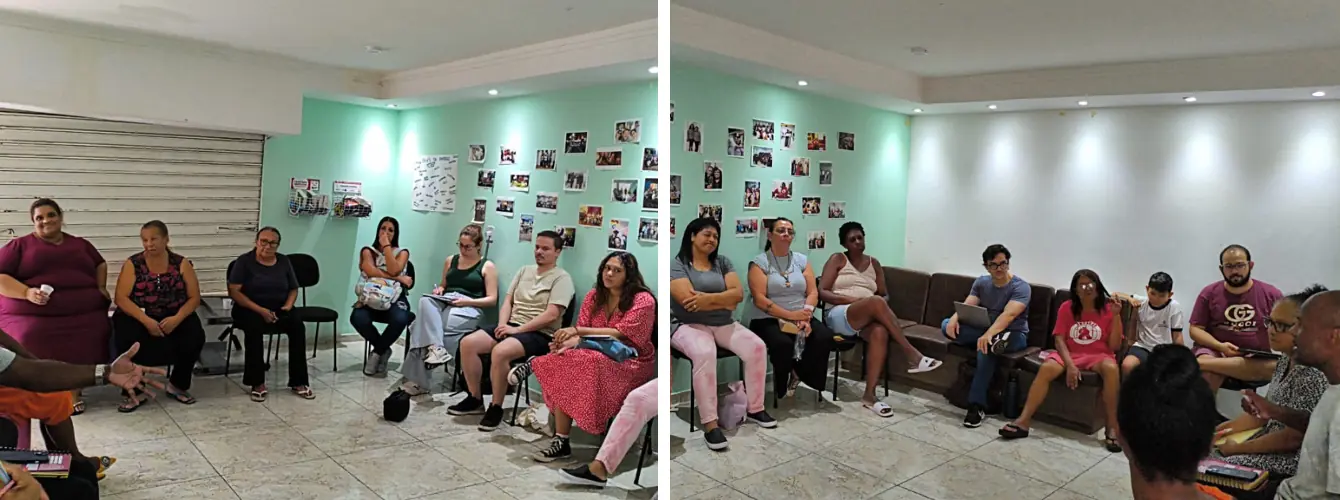
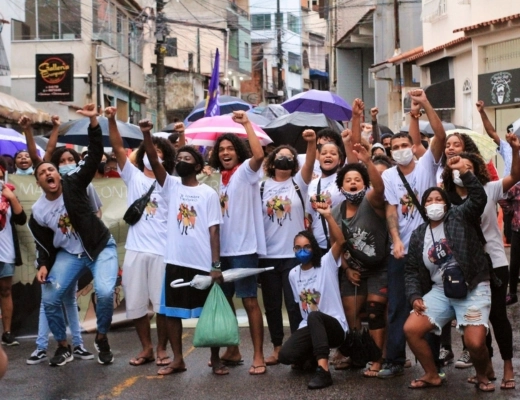
Mothers, relatives, and friends of people deprived of freedom and survivors of the prison system take part in this movement / Pictures: AMPARAR
Currently, AMPARAR is supported in the Criminal Justice theme through an invitation letter, a special line of support aimed towards the institutional strengthening of organizations that have wide network articulation.
One of the landmarks of the organization’s political advocacy was the sending of a dispatch to the Secretariat of Penitentiary Administration (SAP) about how the lack of standardization to the documentation demanded in visits creates bureaucratic and financial hurdles for relatives. The document was also presented to state and federal parliamentary representatives and to the UN’s Special Rapporteur.
The support contributes to the continuity of activities developed by the organization and to the expansion of actions alongside the families in their territories. “We start from the principle that life is the most important of all. And the Brazil Fund believes in our work and gives us life. That strengthens the accompaniment of the families”, affirms Maria Railda.
*T.N. Juvenile Detention in Brazil.