


According to recent data from IBGE, 51,5% of the Brazilian population is female. There’s about 6 million more in comparison to men. On the other hand, only 39,3% of managerial offices are occupied by women. The Brazil Fund supports, throughout the entire country, organizations that strive day after day to change that reality and insert women in leading roles.
Among the initiatives are projects for tackling gender violence and promoting economic autonomy, always considering the intersectional ties that regard each woman specifically.
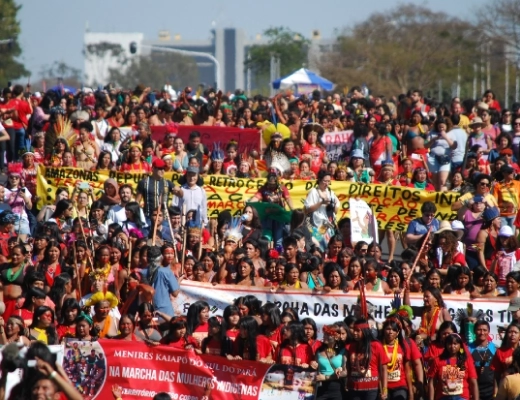
In that type of support fit initiatives such as the Black Women’s March and the Indigenous Women’s March.
In this March 8th, International Women’s Day, the Brazil Fund invites you to know some of these supported groups that have as a main theme the defense of female rights.
Black women’s rights:
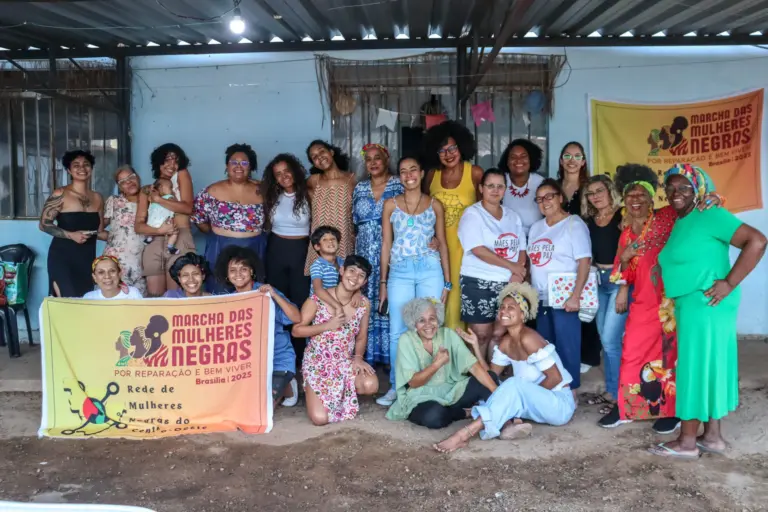
In November 2025, with the funding granted by FMA, the organization was in the Black Women’s March / Picture: Instagram Reproduction @grupo.malunga
Officially founded in 1999, the Malungas Black Women’s Group is comprised of Black feminists who felt the need to express themselves with their own voice. The headquarters is located in the city of Goiânia/GO, where they gather with the goal of acting in the fight against racism, LGBTQIAPN+phobia, religious intolerance, and sexism.
Ever since, they have acted in the promotion of the anti-racist agenda, aiming for the inclusion of Black women in society. In 2024, they were supported by the Tackling Racism from the Basis Call for Proposal, which resulted in political advocacy, social mobilization, and trainings.
With the grant, they provided psychological care to women in situations of vulnerability, took active part in the construction of public policies, being present in municipal, state, regional and national councils, and promoted trainings such as those aimed towards the tackling of racism and religious intolerance. In total, over 2600 people were benefitted – directly and indirectly.
Rights of women from extractive communities:
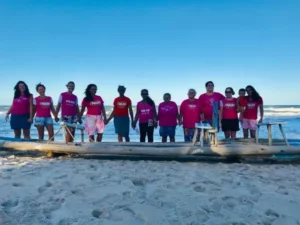
Picture: Facebook Reproduction – Women’s Network
The Network of Women from Extractive Fishing Communities of Bahia was part of a Conservation Unit with 100 thousand hectares located between the municipalities of Una, Canavieiras, and Belmonte. These are areas of Extractive Reserves (RESEX), conservation environments that protect both nature and the living means for people who rely on sustainable extractive work.
In that territory over 16 communities, comprised of fisherwomen, shellfish-gatherers, and family farmers, live amid conflicts with shrimp and animal farming businessmen, who spread over the outskirts of the Resex. All those factors jeopardize the mangroves and associated ecosystems.
The Network was created in 2009 and established in 2010, with support from UN Women. For over 15 years they have implemented collective female empowerment strategies through fishing, seeking to insert people of the female sex in decision-making spaces.
In 2024, they were supported by the Local Communities Fighting for Climate Justice Call for Proposal, which enabled the realization of training workshops and the creation of an autonomous protection and climate monitoring network – implemented and managed by young women. Nowadays, the Network acts directly with about 700 women and indirectly with over 1000.
Indigenous women’s rights:
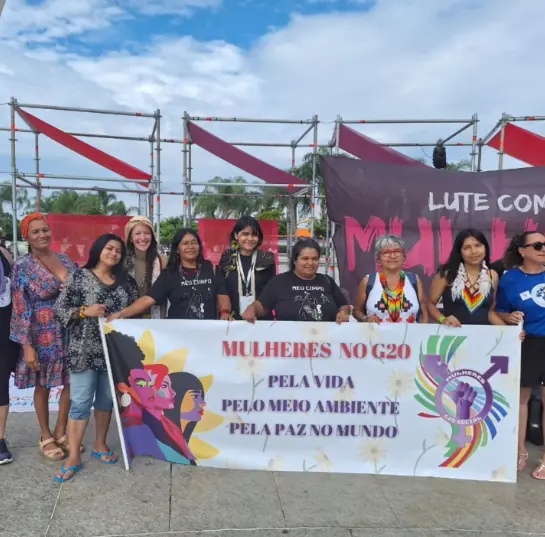
Picture: Instagram Reproduction @amotiabrasil
The Apucaraninha Indigenous Land is located in the South region of Brazil, in the Aracucária Pine Forest. Despite great degradation, the region is the largest environmental preservation area in the outskirts of Londrina. And it’s in that territory the Indigenous people of the Kaingang ethnicity live.
The Association of Indigenous Women from the Apucaraninha Indigenous Land – AMOTIA arose in August 19th 2023 with the goal of, beyond preserving the area, raising awareness among women to the demands aimed towards equity, tackling gender violence, and promoting the territory’s health and income generation.
In 2024, they got support through the Indigenous Peoples Fighting for Climate Justice Call for Proposal, which enabled the strengthening of the fight for territorial and cultural rights that they already defended long before naming themselves as a collective. With support from the Brazil Fund, they have preserved and regenerated the forest, especially the community’s staple food element: the pine nut.
Throughout the project, 3 villages were benefitted directly and over 2100 people were impacted.
It was through the Brazil Fund’s FMA that, between August 2nd and 8th 2025, the organization took a delegation of 30 participants to the Indigenous Women’s March in Brasília. There they could strengthen themselves politically and expand the dialogue with other organizations.
Quilombola women’s rights:
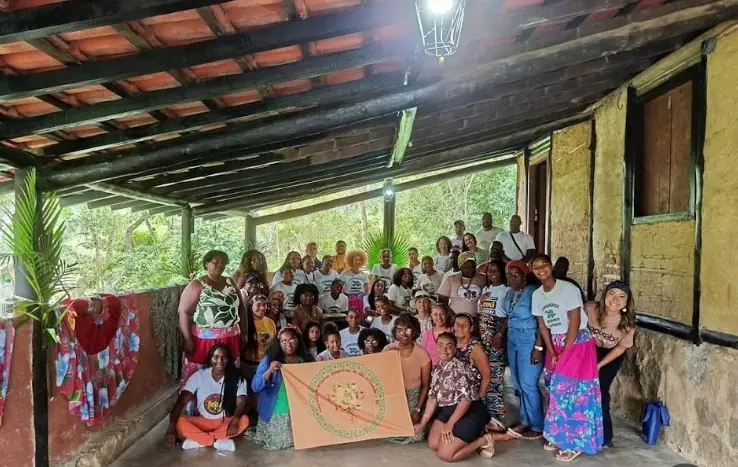
Picture: Instagram Reproduction @ass.mulheresjongueiras
The quilombola territory of São Cristóvão e Serraria is in Espírito Santo, in a region called Sapê do Norte. The quilombo was recognized by the Palmares Foundation in 2006, but up until today fights for access to the place.
Located in the region of the Doce River Basin, the area is marked by a history of predatory economic exploitation, including mining, monoculture, and the building of dams that directly impact in the ways of life of the present communities.
The Association of Jongueira Quilombola Women of São Cristóvão is entirely comprised of quilombola women – either farmers, mothers, daughters, students, teachers and/or caregivers.
To be a jongueira woman is to be a guardian of knowledge. And it was based on this concern, in keeping traditional knowledge alive, that the organization came up.
With the grant conferred by the Promotion and Defense of Human Rights in the Doce River Basin (2025) Call for Proposal, they could uphold their ancestral legacy that was being forgotten, especially by the youths. They then built the so-called healing gardens. These are spaces in which products such as dendê oil and tapioca are cultivated, the second being one of the staples of the land’s cuisine.
The female role is essential in the production of this food, since it’s women who lead the production and, through it, manage to contribute to the survival of their relatives in the community.
Working women’s rights:
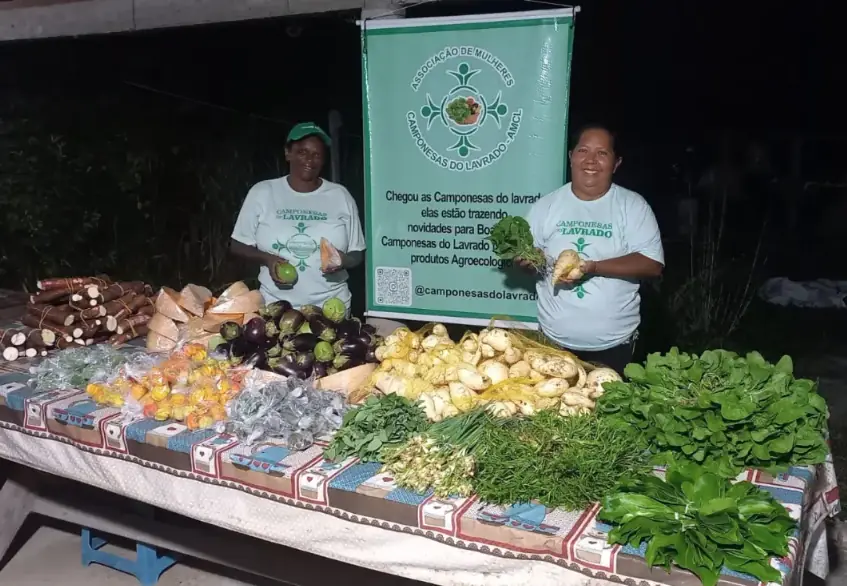
Picture: Instagram Reproduction @camponesasdolavrado
Located in Lavrado de Roraima, a region of the Far North of the Amazon, the Lavrado Association of Peasant Women (AMCL) was created with the goal of strengthening the autonomy and protagonism of family farming women.
The organization, informally founded over 3 years ago and officialized sometime later, is led by rural workers who are directly impacted by labor precariousness and informality. The main goals are to reduce the vulnerabilities of these women and to create a support network.
In 2025, they had a project approved through the Strengthening Informal Workers in the Fight for Rights Call for Proposal, a support line that is part of the Labora Fund for Decent Work.
The main actions revolve around agroecological and sustainable practices that respect both local ecosystems and traditional knowledge. At the same time, those activities generate income for the countryside women. To enact these goals, they undertake community meetings seeking the exchange of experiences, create debates, and develop trainings aimed towards labor rights, union organizing, and political participation.
Rights of peripheral women:
Picture: Facebook Reproduction – Sargento Perifa
The Córrego do Sargento community is located in Linha do Tiro, a neighborhood of the north end of Recife that has almost 15 thousand inhabitants, wherein over half of them (54,4%) are women. The territory is permeated by police brutality, domestic violence, silencing, landslides, lack of access to mental healthcare, food insecurity. In all cases, the main affected people are female.
The Sargento Perifa Collective, idealized by a Black woman, journalist, and resident of Linha do Tiro, arose in 2020 to analyze and reverse data such as that. In July 25th 2023, the Perifa Network of Women and Girls was created: a project that aims to stimulate the implementation of public policies that ensure better female representativity in politics and in the job market.
In 2025, they received support from the Brazil Fund through the General Call for Proposal – Democracy and Rights: Building the Future with Justice and Equality. Through it, they could strengthen the Network and also carry on with activities such as the resident’s meeting, in which they discuss themes like women’s rights in media and the way by which it shapes gender perceptions and stereotypes.
The collective is an open space for a collaborative production by the participants, and fosters the territory’s strengthening through communication, be it online or offline.
Women’s right to social protection:
Picture: Instagram Reproduction @casa8demarco_to
In 1998, Tocantins went through a scenario of impunity towards violence against women. In that same year, March 8th House was founded, also known as Encamto – Women’s Houses Entity in Tocantins.
Officially inaugurated on March 8th of that same year, the organization seeks to this day to offer assistance and psychological support to cis and trans women, especially those in situations of unemployment and social marginalization, single mothers, violence victims, and pregnant teenagers.
The organization, supported by the Comprehensive Security of Human Rights Defenders: Supporting the Frontline in Defense of Democracy Call for Proposal (2025), counts with courses aimed towards the empowerment of peripheral women, educational work about gender, health, reproductive and sexual rights, and popular communication.