

Photo: Brazil Fund Archive
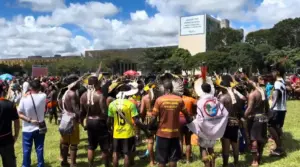
The Brazil Fund allocated BRL 381,100 (roughly US$ 76,390) to ensure the participation of 19 Indigenous organizations in the 22nd edition of the Acampamento Terra Livre (ATL, Free Land Camp), held from April 5 to 11, 2026.
The amount represents a 182% increase compared to the BRL 135,000 allocated to the previous edition, highlighting the foundation’s strengthened commitment to the territorial rights of Indigenous peoples.
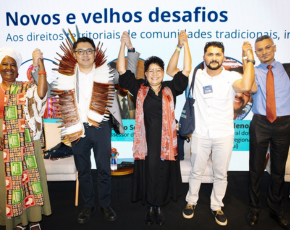
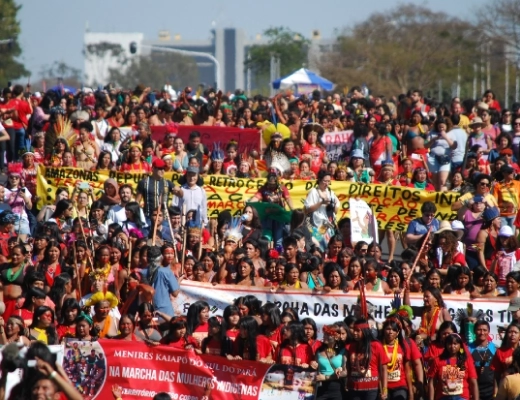
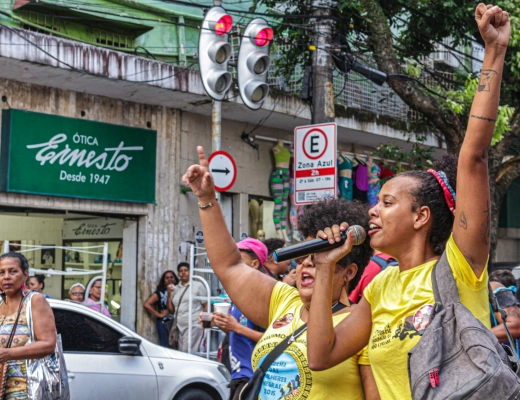
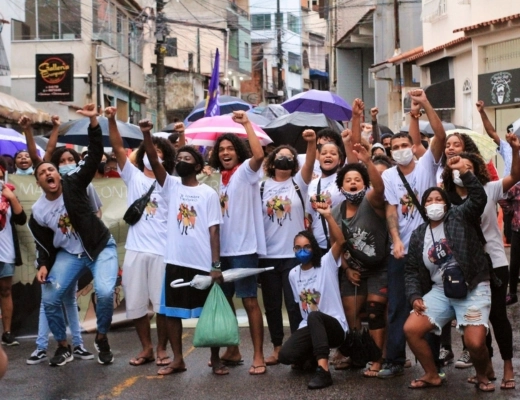
The mobilization took place at the Ibero-American Cultural Axis in Brasília (DF). The ATL brought together more than 7,000 Indigenous participants from around 200 peoples, coming from all regions and biomes of the country. Considered the largest Indigenous mobilization in Latin America, the initiative is organized by the Articulation of Indigenous Peoples of Brazil (APIB), in coordination with its regional branches, and has established itself as a strategic space for political advocacy and the strengthening of Indigenous struggles.
Under the theme “Our future is not for sale: we are the answer,” the mobilization took to the streets and institutional arenas demands for land demarcation and the protection of territories against predatory economic exploitation. According to APIB, at least 110 Indigenous lands have already gone through key stages of the administrative process and are ready to move forward, underscoring the urgency of concrete action by the Brazilian state.
The gathering took place in a challenging context. At least six anti-Indigenous proposals are currently under consideration in the National Congress, including the “marco temporal” (time frame) thesis, which restricts the right to land demarcation. The slow progress of these proceedings, combined with rising violence against Indigenous leaders and the criminalization of movements, reveals ongoing obstacles to the enforcement of constitutional rights.
Support from the Brazil Fund made it possible for Indigenous groups, collectives, and organizations backed through the Mobilization and Articulation Fund to attend, covering transportation, food, and basic infrastructure costs for participation in Brasília.
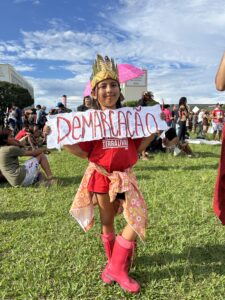
Photo: Brazil Fund Archive
The resources were allocated both to APIB itself and to organizations from the North, Northeast, Central-West, and Southeast regions. See the list of organizations below:
Articulation of Indigenous Peoples of Brazil (APIB)
Articulation of Indigenous Peoples of the Southern Region (ARPINSUL)
Coordination of Indigenous Organizations of the Brazilian Amazon (COIAB)
Hotxwa Association – Ihken Company
Aulukumã Association of Alto Xingu
Tupinambá Indigenous Women’s Group of Acuípe de Baixo – Kuîã Atã (“Strong Women”)
Tuxa Indigenous Agricultural Consortium – Rodelas (CARITU)
Araweté Indigenous Association of Médio Xingu
Akwê Xerente Fire Brigade Association for Prevention and Management of Wildfires and Forest Fire Response
Association of the Cariri Indigenous People of Poço Dantas
Articulation of Indigenous Organizations and Peoples of Amazonas (APIAM)
Indigenous Council of the Potigatapuia Movement of Serra das Matas
Indigenous Association of Aldeia Serrote dos Campos, Itacuruba (PE)
Indigenous Association of the Bom Jesus Community (AICBJ)
Curica Indigenous Socio-Environmental Association – Curica Network
Ni Shuvini Village
Articulation of Indigenous Peoples and Organizations of the Northeast, Minas Gerais, and Espírito Santo (APOINME)
Acre Indigenous Communicators Network
Collective of Indigenous Women of Rio Verde village, Pareci Indigenous Land, Tangará da Serra (MT)