





Organizations supported by the Brazil Fund come together for a training initiative focused on defending traditional Afro-Brazilian communities
Ìyá Jô Brandão, coordinator of the Dan Eji Collective — an organization dedicated to defending terreiro communities (traditional peoples of Afro-Brazilian religion) — remembers being called numerous times in the middle of the night to guide victims on how to proceed in cases of religious racism. While she consistently tried to meet these demands, their recurrence revealed a broader issue: many people turned to her because they simply did not know what to do in these situations.
“Establishing an integrated response flow creates greater confidence about where to go and what will happen in these cases”, she explains. The idea is that, by setting protocols within institutions, the reporting process becomes more straightforward. With clearer step-by-step guidance on how to file a complaint, victims of religious racism can proceed more securely, avoiding situations of re-victimization.
Through the call for proposals Tackling Racism from the Grassroots Up – 2024, an initiative exclusively aimed at Black-led organizations and activists, the Dan Eji Collective, in collaboration with Assessoria Cirandas, planned a workshop to develop care protocols for cases of religious racism. “The call created a space for organizations to come together and allowed us to exchange social technologies, with the Brazil Fund’s advisors acting as a bridge between us”, says João Paulo, coordinator of Assessoria Cirandas.
This case also illustrates how the Brazil Fund work fosters collaboration among supported initiatives, strengthening connections through the diversity and capillarity of its support.
The survey “Respect My Terreiro”, conducted by the National Network of Afro-Brazilian Religions and Health (Renafro) and the terreiro Ilê Omolu Oxum, shows that 77% of Brazilian terreiros have experienced religious racism. Of those, only 26% were able to file a police report, revealing barriers to reporting these incidents. In Maranhão, the Dan Eji Collective has been mobilizing to propose public policies that make this process more organized and accessible.
One outcome of this effort was the enactment of Decree 37.761/2022, which establishes the State Policy for the Protection of the Rights of Traditional African and Afro-Brazilian Communities. It consists of a set of guidelines that facilitate reporting by integrating security and justice institutions to speed up investigations and combat institutional racism.
Tackling racism as a central priority
The call for proposals “Tackling Racism from the Grassroots Up” ensures that these organizations are able to promote racial justice and defend the rights of Black communities while also supporting their practical sustainability, allowing them to grow institutionally and meet basic needs such as food and transportation.
The thematic call was designed to better respond to the specific realities of Black-led organizations working toward racial equality. Within this axis, projects that incorporate intersectional factors like race, gender, and sexuality, and/or that focus on addressing state violence and the genocide of Black youth, defending traditional territories, and protecting Afro-Brazilian religions are prioritized.
The workshop
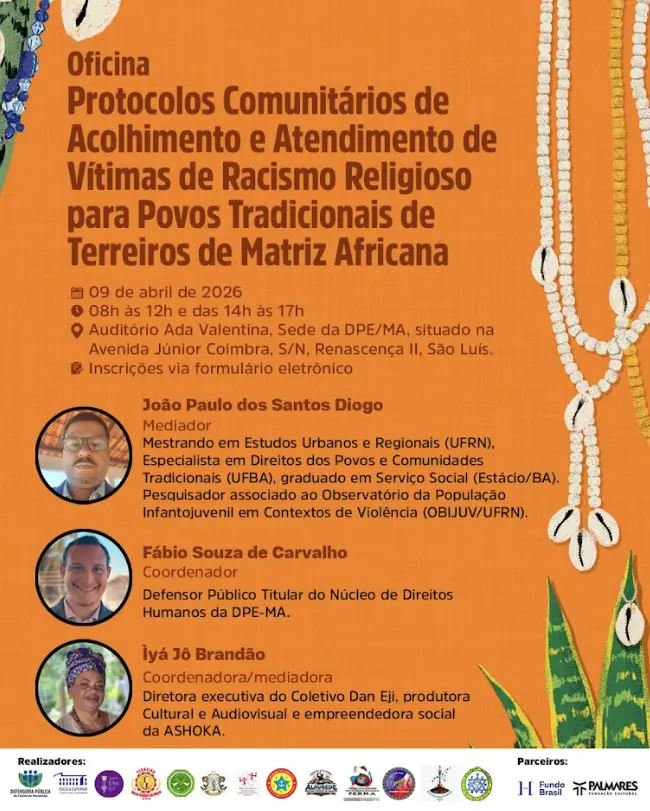
Workshop promotional banner / Photo: Assessoria Cirandas
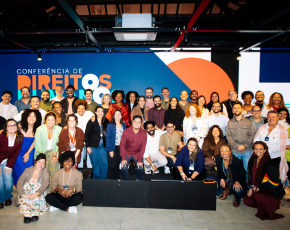
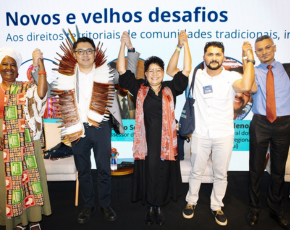
On April 9, 2026, a workshop in defense of victims of religious racism was held. It was jointly developed with the State Public Defender’s Office, the Public Defender’s School, and other entities from the Terreiro Movement of Maranhão, at the DPE/MA headquarters.
The initiative is based on the idea that care protocols must be established even before a crisis occurs. With this in mind, the meeting’s main objective was to systematize response strategies and develop guidelines on the actions to be taken when violence actually occurs.
With participation primarily from members of terreiro communities and some representatives of the Public Defender’s Office, the workshop was conducted entirely in person and in an interactive format. It included activities such as the collective development of “situation maps,” mapping out possible routes to access the justice system.
In the lead-up to the training, Jô and João met to analyze real cases of religious racism, using them as a foundation for the discussion: “We spoke to gather as much information as possible, so that the debate would remain grounded in people’s realities and aligned with the needs of the territory,” the coordinator says.
In addition to ensuring that the stories reflected participants’ lived experiences, the meeting also stood out for its intergenerational aspect. “The main leaders of the terreiros were there, usually older individuals, but there were also younger leaders. It was a beautiful coming together of generations, truly diverse. And everyone was incredibly open and willing to be part of that space,” João recalls.
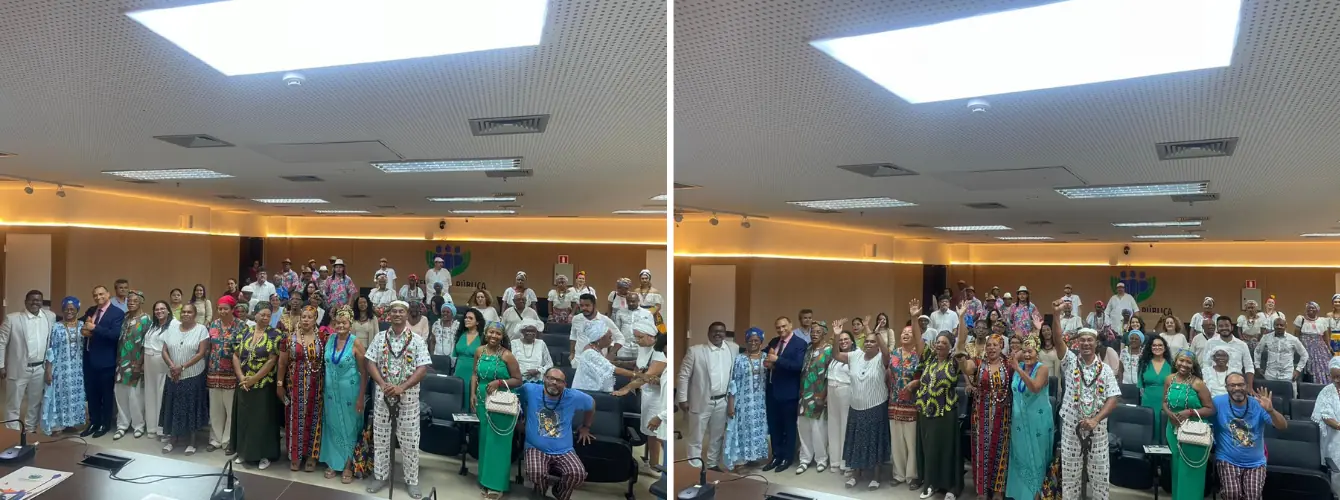
Photos: Dan Eji Collective
Why is network-based work important?
Collaboration between different organizations is a two-way street. It is a moment to share knowledge shaped by the specific realities of their territories and the communities they belong to. At the same time, it enables them to rethink their paths and learn new strategies by observing the work of others.
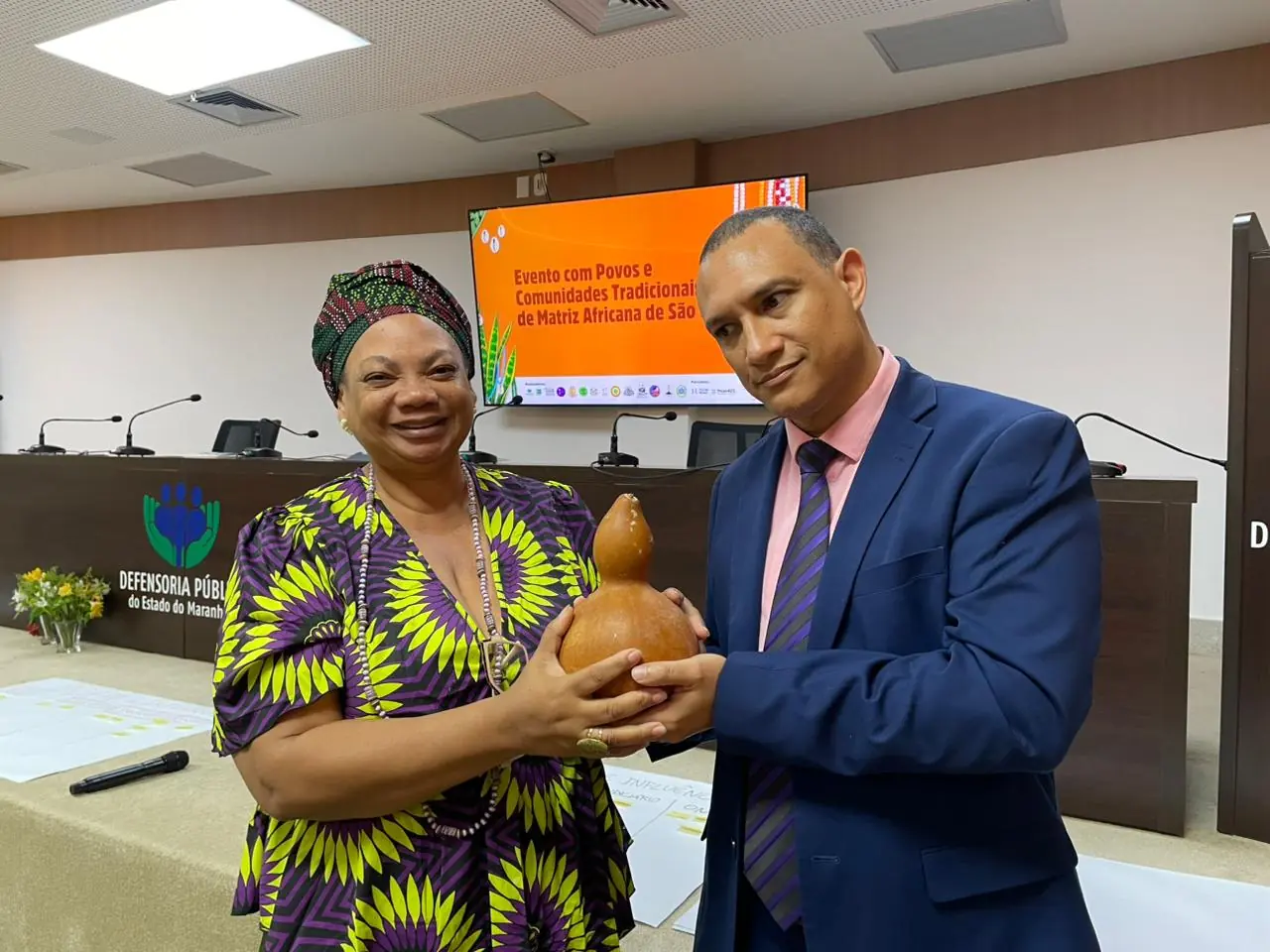
Photo: Dan Eji Collective
Jô believes this contributes to recognizing progress within the field: “It was very important to experience this exchange of knowledge and social technologies with Cirandas. It’s something that deeply matures us as we think about the advocacy work we carry out”.
For João, it was also a chance to reflect on their work: “In the planning stage, the Dan Eji Collective proposed discussing reception and support protocols. We don’t usually address that at Cirandas; we tend to focus more on security issues, on removing leaders from the territory, but we found the approach valuable. This interaction with Jô helped us see something we still need to develop further,” he reflects.
For him, bringing the collectives together “was a very meaningful experience,” leaving him enthusiastic about how the meeting can produce concrete changes in the state of Maranhão and resonate throughout Brazil. “It is encouraging that the Public Defender’s Office is willing to drive this debate by convening actors to strengthen an existing public policy. Maranhão is promoting something quite advanced — associating a community-based protocol with an inter-institutional one.”
“The most valuable takeaway from the workshop was that participants left with a more mature understanding of the importance of working in an integrated way — and of the fact that we are not going to overcome racism on our own. Neither the movement, in isolation, nor public authorities can resolve it. Without this integration between the state and civil society, the problem will not be solved,” says Jô.
Assessoria Cirandas Collective
Founded on March 21, 2009, in the state of Bahia, the Assessoria Cirandas Collective emerged from a desire to participate more actively in efforts to combat racial injustice and defend the rights of traditional peoples and communities. Today, it is also active in the states of Rio Grande do Norte, Paraíba, and Maranhão.
In a scenario of escalating threats to traditional peoples and communities — stemming from territorial disputes, land pressure, and institutional violence — the collective engages in active listening with communities, fosters connections with protection networks, and develops methodologies adapted to local realities.
A standout initiative is Okan Ọtum – Protection of Defenders of Traditional Territories, backed by the 2024 Tackling Racism call for proposals. In Yoruba, Okan Ọtum means “Heart of Rights,” a name that “reflects the program’s commitment to working at the core of human rights issues” and its “mission to protect those who protect,” particularly women who are traditional leaders.
Throughout the project, the team conducted training sessions, provided individualized support to leaders facing threats, and engaged with human rights institutions. These actions resulted in 400 direct beneficiaries (those who actively took part in the activities) and 6,000 indirect beneficiaries, including residents of the communities served. The collective has thus become a regional reference in community self-protection.
João points out that, even when the public agenda is unfavorable, sustaining the work requires consistent support, whether public or private: “It is essential to have investments from foundations such as Brazil Fund, which allows independent voices to call out where the State is falling short. This is highly strategic.”
Dan Eji Collective
Founded in 2018, the Dan Eji Collective is dedicated to addressing and challenging religious racism in the state of Maranhão. Made up of women of axé (Afro-Brazilian religious practitioners), environmentalists, and activists, it focuses on preserving Afro-Brazilian religious traditions in the state.
In 2024, through the Tackling Racism call for proposals, the collective developed the Xangôlab initiative. It consists of creating a space dedicated to providing support, assistance, and legal guidance to traditional terreiro communities. The initiative reached 300 community members, including those indirectly impacted by its activities and discussions.
Beyond its state-level advocacy, the collective also systematized data and increased the visibility of the debate on religious racism through national partnerships, including the Brazilian Network of Women Human Rights Defenders. The initiative further expanded internationally, leading to the submission of reports to the Convention on the Elimination of All Forms of Discrimination against Women (CEDAW) and participation in UN forum meetings.