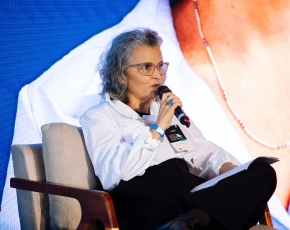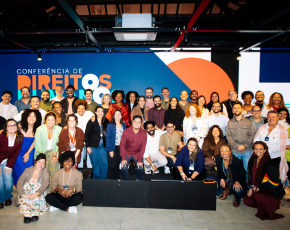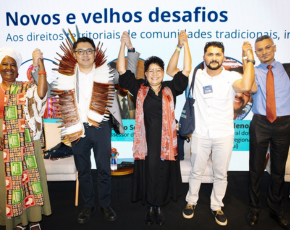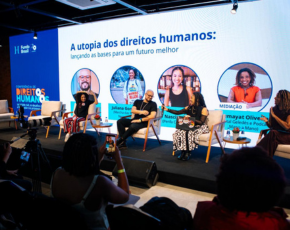



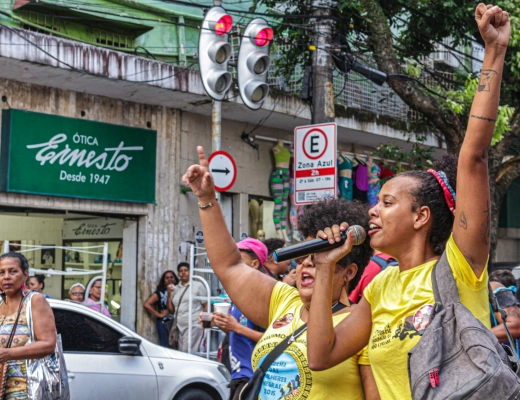
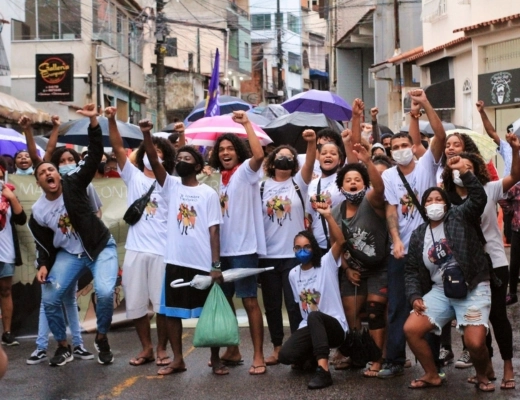
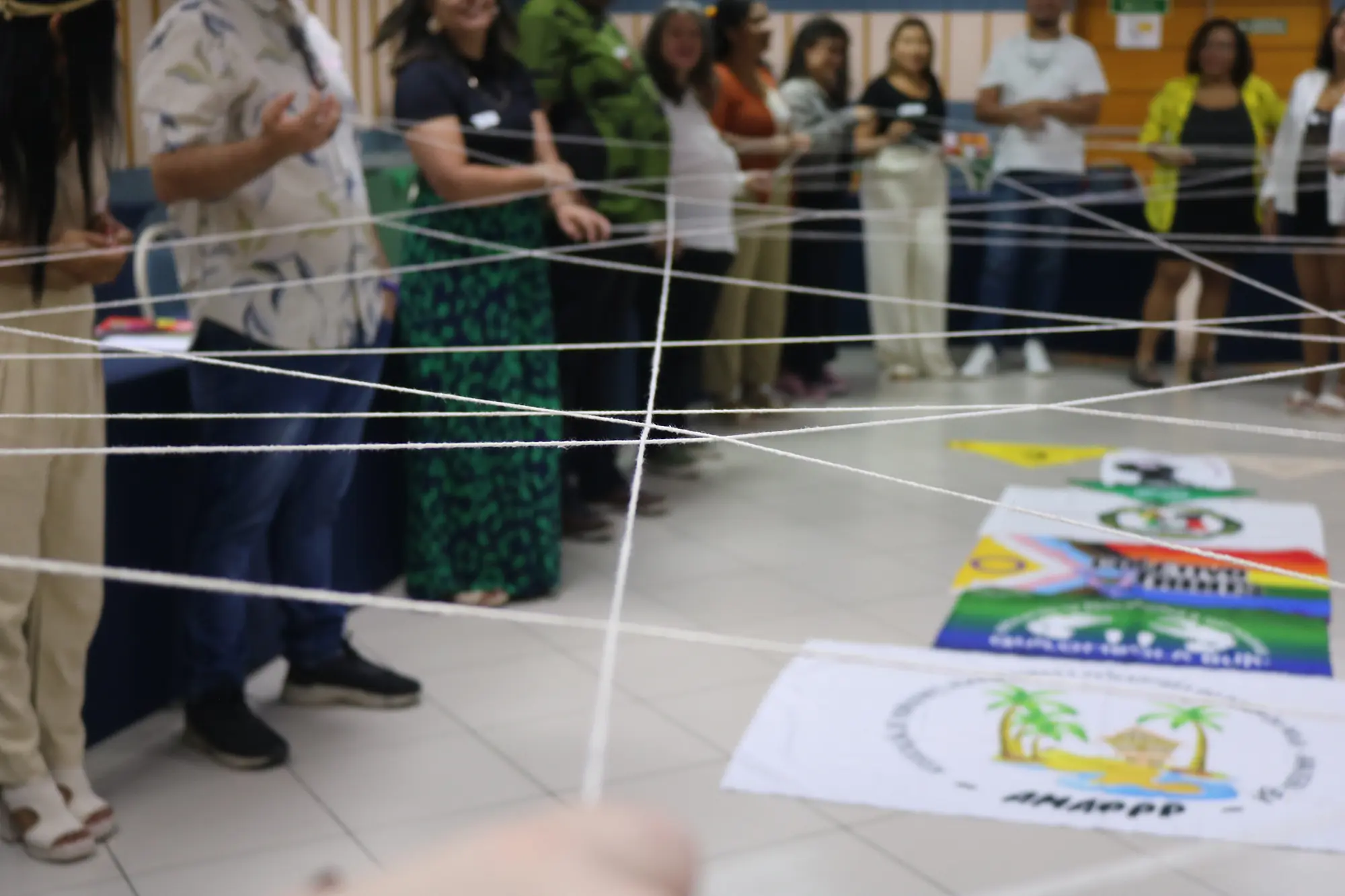
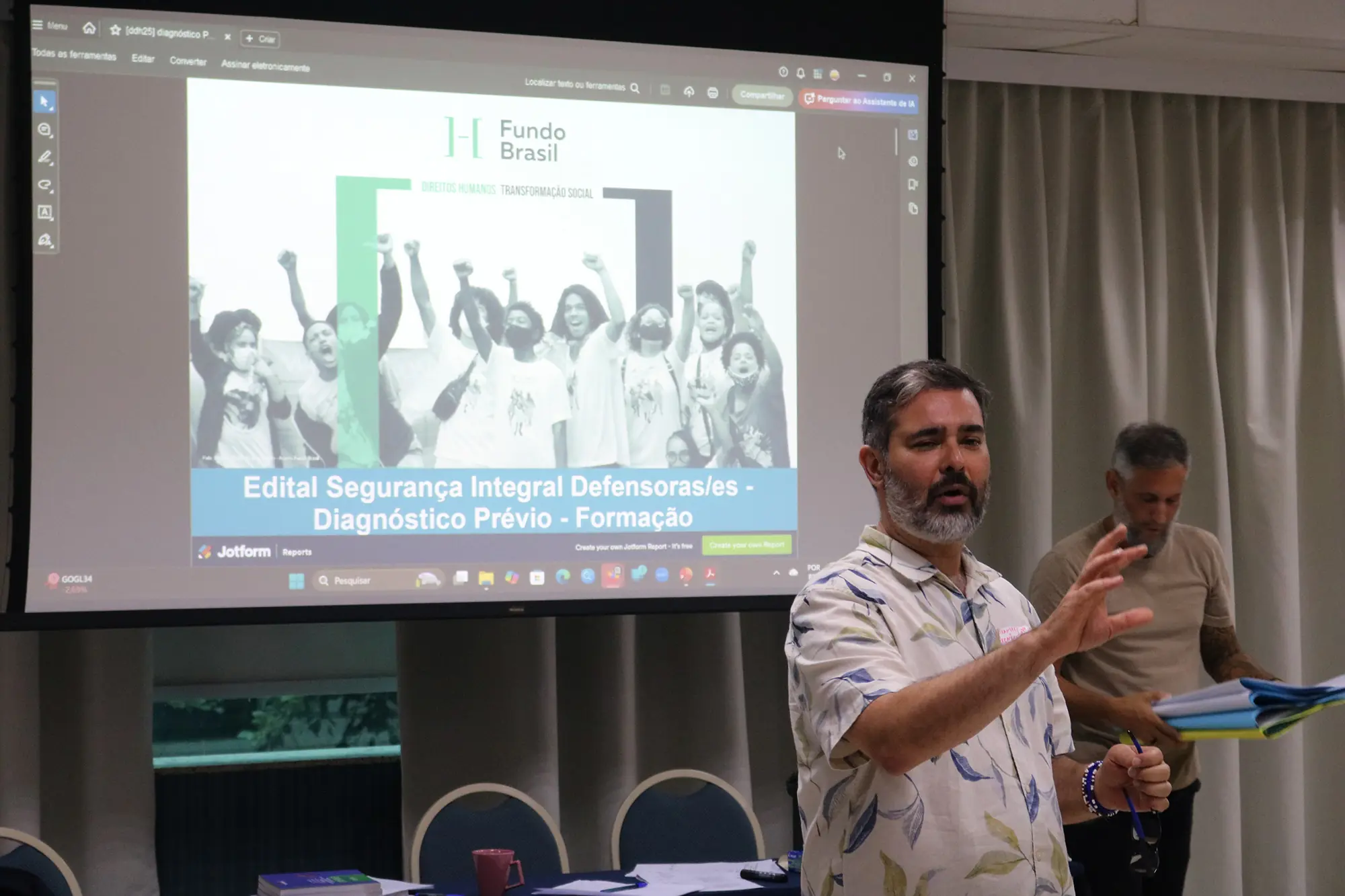
Activity during the comprehensive security workshop (Airan Albino / Brazil Fund Archive)
Brazil is one of the countries where human rights defenders face the greatest risks worldwide. Data from the NGOs Justiça Global and Terra de Direitos indicate that, in 2024 alone, 188 Brazilian activists were persecuted, threatened, or subjected to some form of violence (including lethal violence) due to their political activities. In the 2023–2024 biennium, two people were killed each month simply for defending human rights.
In response to rising insecurity and to strengthen the protection capacities of groups and collectives operating in the country, the Brazil Human Rights Fund revised its strategy and, in 2020, launched a call for proposals focused on providing resources for activists’ security through structural support. Now in its fourth edition, the call for proposals, initially titled the Human Rights Defenders Call, was a pioneering initiative in Brazil.
In late March, the organization brought together 21 groups selected for the 2025 edition (Comprehensive Safety of Human Rights Defenders: Supporting the Front Lines in Defense of Democracy call for proposals) at a workshop on comprehensive protection. The two-day activity was facilitated by Sandra Carvalho and Antônio Neto, from the NGO Justiça Global. It offered participating groups a chance to pause and reflect on how to map risks and, from there, develop strategies to work more safely.
The gathering also prompted a necessary reflection: when discussing “security,” human rights organizations often focus on the well-being of their communities and territories. This is, of course, essential. “But little is said about the safety of those who protect the territory,” says Alexandre Pachêco, the Brazil Fund project officer responsible for this funding line. “We want organizations to shift their focus away from the territory for a moment and look at their teams and the risks their members are exposed to.”
The evolution of the conversation on security
Project officer Alexandre Pachêco: security measures have entered organizations’ agendas (Airan Albino / Brazil Fund Archive)
The funding line maintained by the Brazil Fund is aimed at the “comprehensive protection” of human rights defenders. This means that, when thinking about security, it considers at least four dimensions: physical, digital, psychosocial, and organizational protection.
Since the first call for proposals under the Human Rights Defenders line was launched, all supported organizations have taken part in meetings organized by the Brazil Fund to discuss comprehensive protection strategies. Pachêco notes that this experience has allowed him to track how the conversation has evolved over the years.
For a long time, the field recognized its importance, but the issue was not incorporated into organizations’ agendas: in their day-to-day work, defenders tend to underestimate the risks they face. “When we first started organizing gatherings like this, it was rare to find an organization that had already taken part in comprehensive security training,” he says.
Over the past four years, however, the number of groups arriving at these workshops with some prior knowledge of the topic has grown. “Today, the discussions in this workshop show that the issue is firmly on the organizations’ radar,” he adds.
This perception is confirmed by the profile of the organizations attending the activity, developed by the Brazil Fund team.
Nearly half of them (48%) said they were already developing a security plan; even before the workshop, 38% considered themselves “somewhat confident” in designing protection strategies; and all reported that they had already started discussing security with their teams. There is still significant room for progress: 67% of the organizations present said they had never undergone a security assessment.
In the last decade, the conversation on mental health has also evolved. “A human rights defender is someone who never rests, because the world is falling apart. And when they do rest, they feel guilty,” says Antônio Neto, from Justiça Global.
The topic has gained traction in exchanges among organizations, although certain challenges still seem to persist. “The conversation on mental health often splits into two unproductive poles: on one side, a very individual approach; on the other, approaches that assume that under capitalism, there is nothing that can be done to promote mental health,” says Pedro Lagatta, a Brazil Fund project officer and trained psychologist. “It’s important to consider structural problems. But it’s also important to remember that it’s possible to create openings within our day-to-day work.”
The role of the State
While emphasizing the importance of developing their own protection strategies, participants also stressed that it remains the State’s responsibility to ensure that human rights activists have a safe environment in which to operate. “This is a duty of the State, and we must not lose sight of that,” said Sandra Carvalho.
In the early 2000s, Sandra took part in building the Program for the Protection of Human Rights Defenders, Communicators, and Environmentalists (PPDDH). Funded by the federal government, the program operates through partnerships with social organizations, while also maintaining its own teams in eight states and a federal team based in Brasília. “With the creation of the program, Brazil became one of the first countries to establish a solid protection framework for defenders,” Sandra explains.
However, challenges remain. Activists who have relied on public policy complain of a disconnect between certain proposed protection actions and the risks faced in their territories. Analyses by civil society organizations also showed that, at various points, the program has suffered from underfunding or low budget execution.
Sandra notes that, in recent years, civil society organizations have focused on proposing changes to address these weaknesses. “Despite its problems, the program is an achievement that needs to be improved and strengthened.”
Tips for conducting a strong risk assessment
In the volume “Protection Guide for Human Rights Defenders”, developed by the Justiça Global team, the authors explain that “risk analysis or assessment is a way of measuring the risk that a defender or a collective may be facing,” and is an essential step in building protection strategies. Throughout the workshop, Sandra and Antônio pointed out useful tips for those who need to conduct a risk assessment.
– A strong risk assessment must be tailored: It should account for the specificities of every context. The risks identified by one organization may differ from those identified by another, even when both work in similar fields. “The analysis needs to be aligned with reality, context, and local conditions,” Neto says.
– Be thorough: During the mapping process, clearly identify the actors involved, both those who pose risks and those who are potential allies.
– Pay attention to the digital sphere: In recent years, digital attacks have increased in both scale and intensity. These risks also need to be mapped during the assessment. “After all, a digital attack can be highly destabilizing,” Sandra adds.