




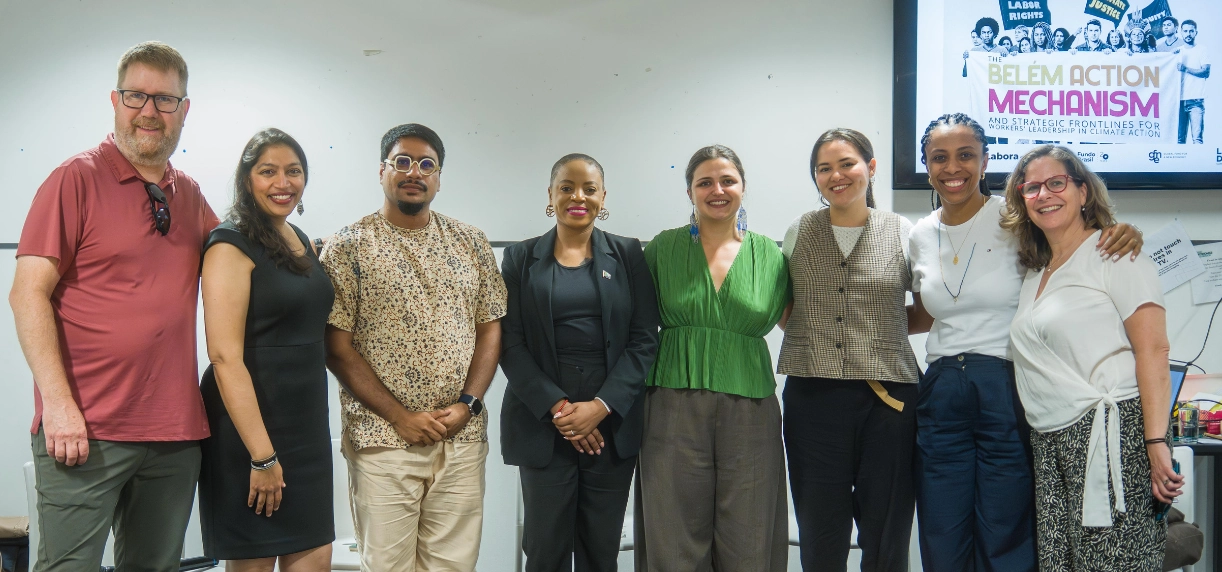
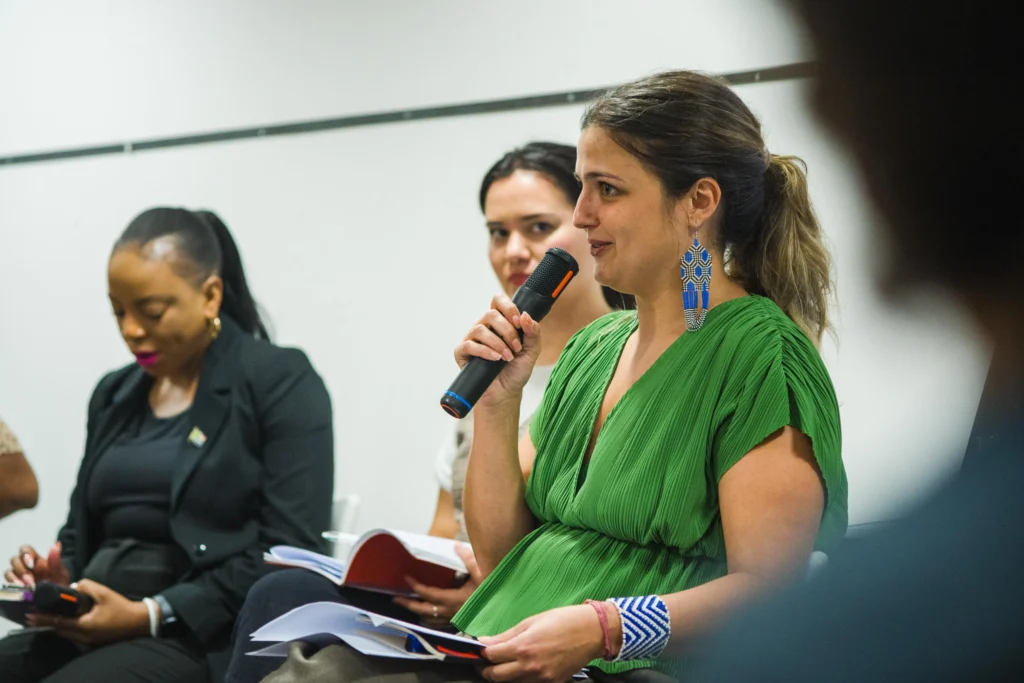
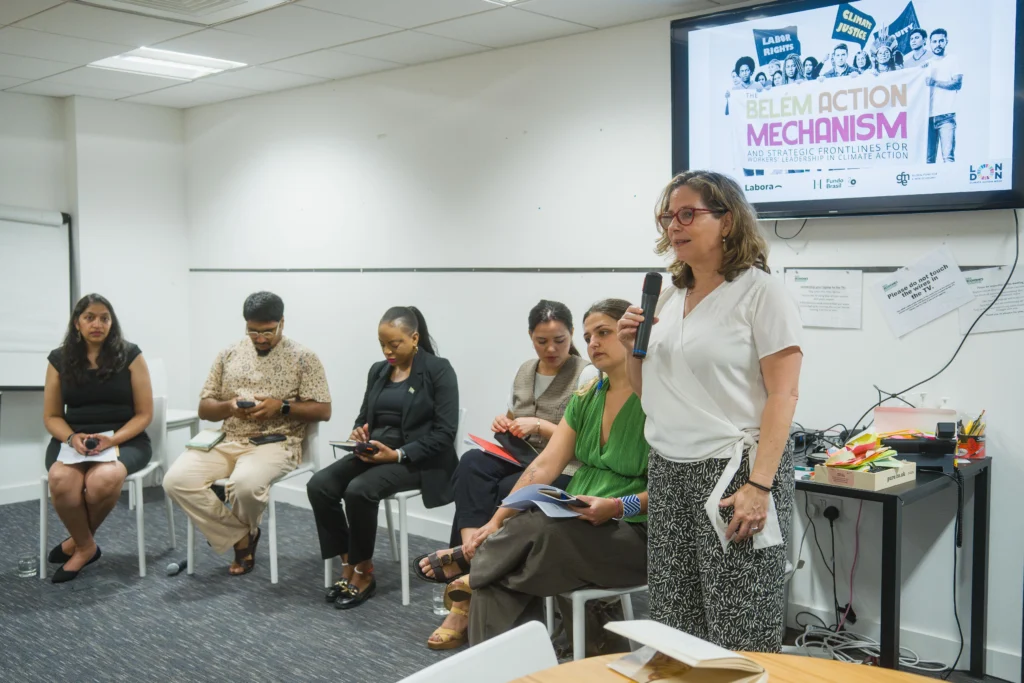
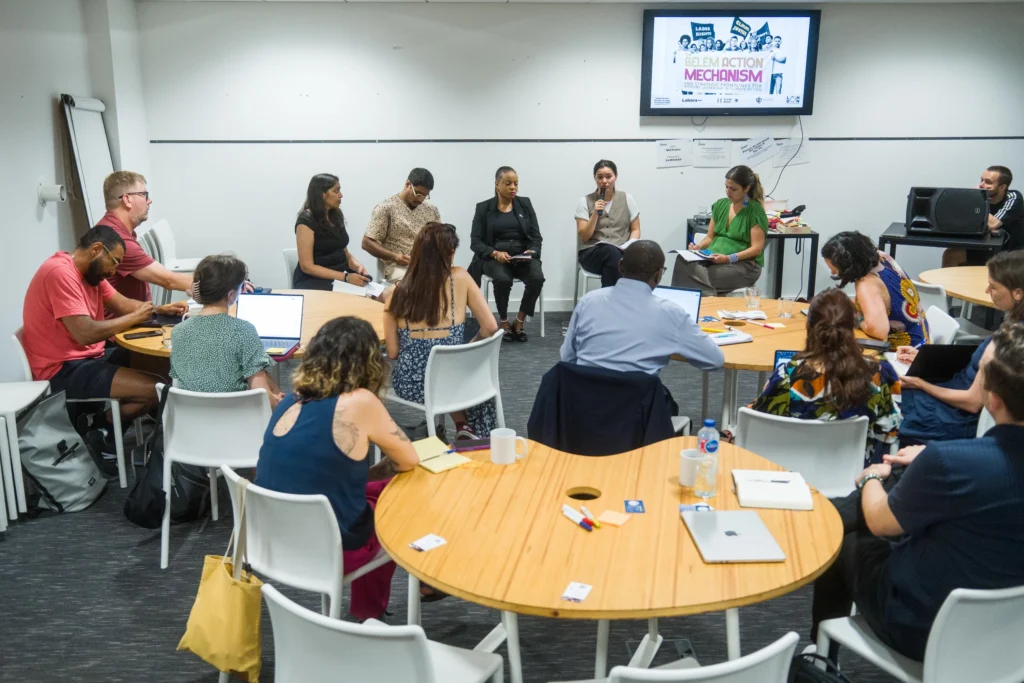
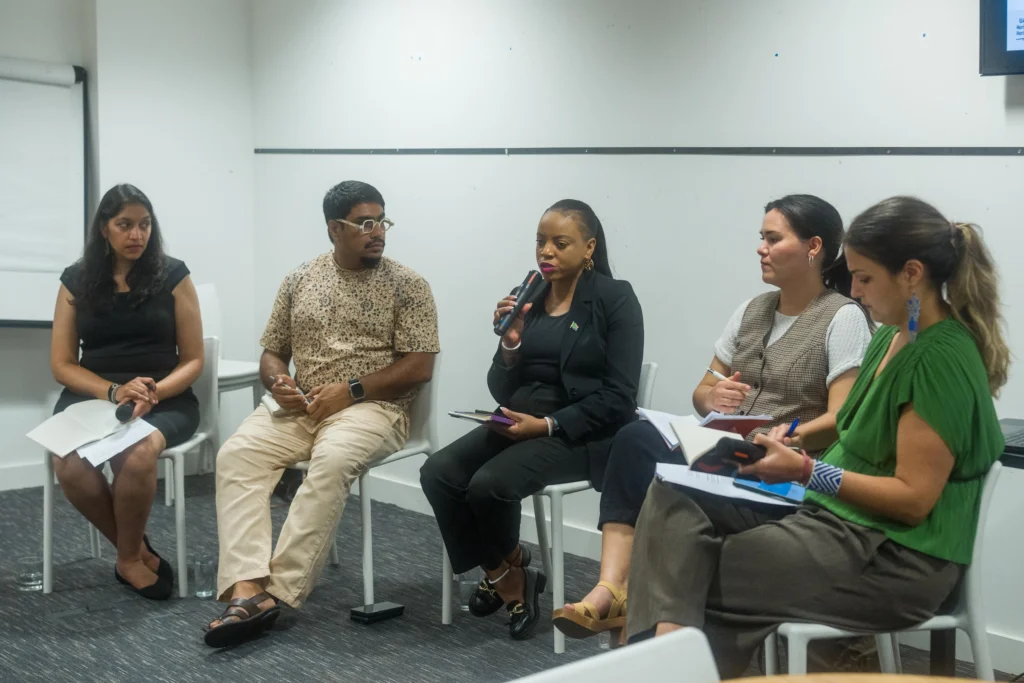
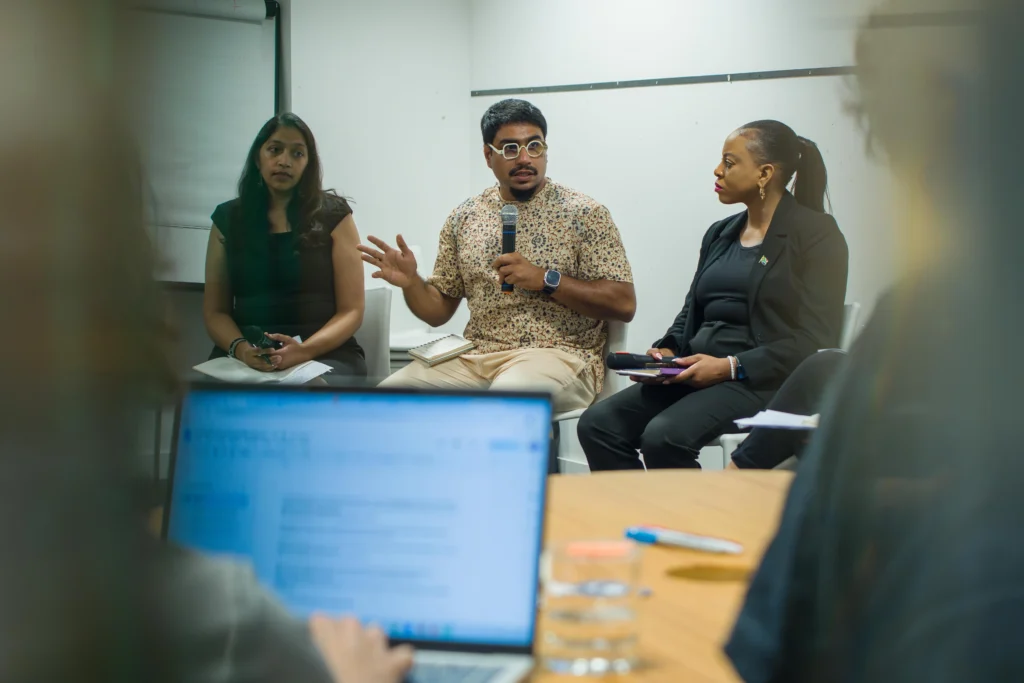
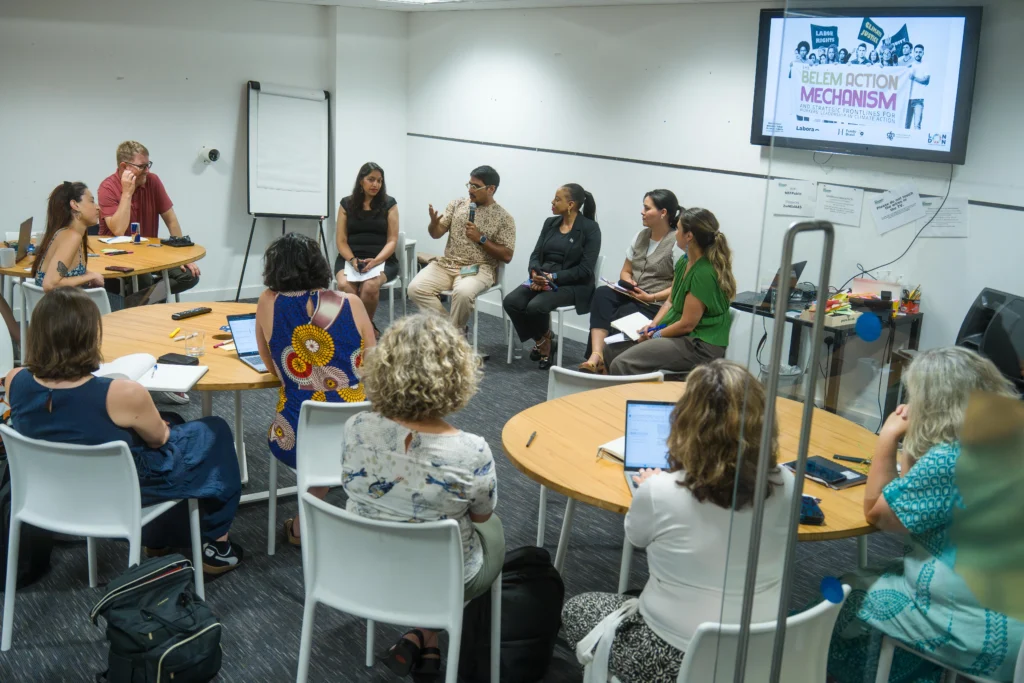
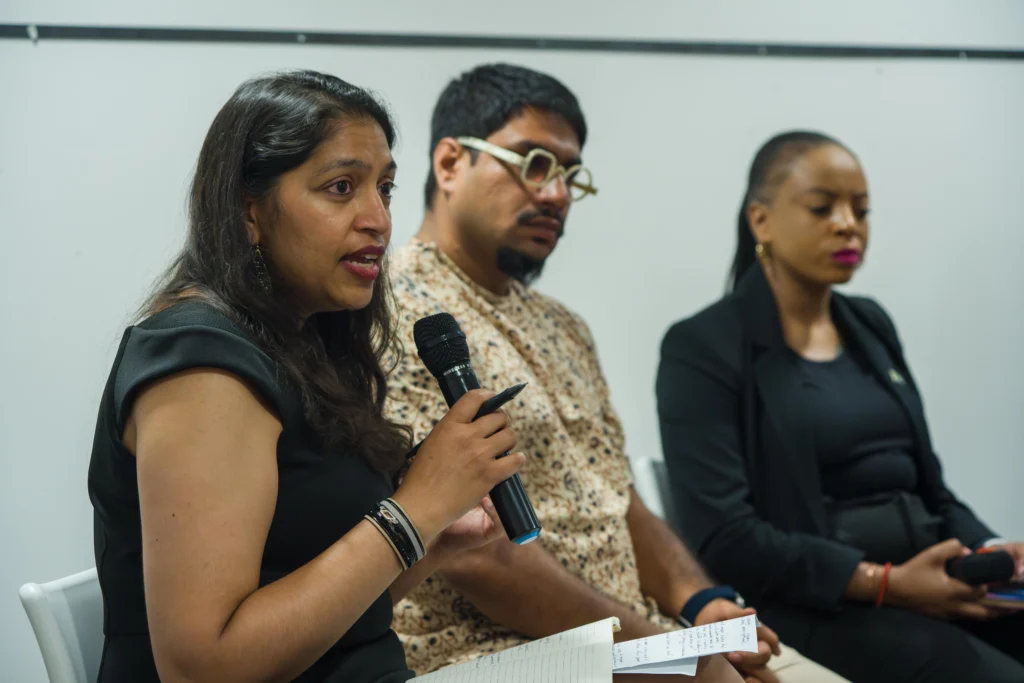
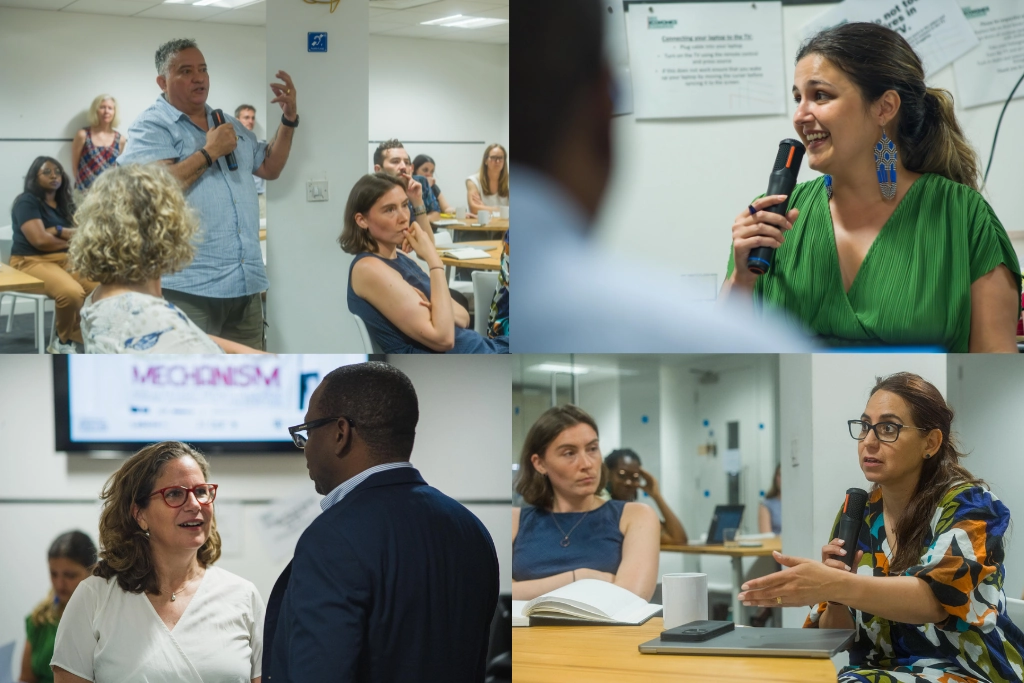
The role of workers in building a just climate transition was the central theme of the panel “The Belém Action Mechanism and Strategic Frontlines for Workers’ Leadership in Climate Action”, held on 23 June during London Climate Action Week.
The event, held at the New Economics Foundation, was organised through a partnership between Labora – Fund for Decent Work (an initiative of the Brazil Human Rights Fund), the Working Horizons Initiative, and the Global Fund for a New Economy. The discussion took the Belém Action Mechanism (BAM) as its starting point – a commitment agreed during COP30, held in Belém, Brazil, in November last year.
The mechanism was created to support a transition towards sustainable economies that is just and inclusive, with greater participation of workers and their organisations in climate decision-making. Trade union organisations see it as an important achievement in placing labour rights and workers’ active participation at the centre of the just transition towards a sustainable economy.
Introducing the discussion, Amanda Camargo, programme coordinator at Labora, recognised that BAM is a victory, but framed it as the start of a broader discussion: “The Belém Action Mechanism is a key point of this conversation, but it is not the only one. It is an entry point for our dialogue.”
She also reiterated that the effectiveness of any climate mechanism depends on ensuring “workers’ participation, leadership, and input at every level”. She recalled that, over the past three years, Labora has supported around 190 labour organisations in Brazil, across more than 300 projects.
Amanda highlighted how the climate crisis deepens existing inequalities. “We have seen, in practice, how climate change is cross-cutting for urban and rural workers, as well as forest and water communities, disrupting everyday life in conditions that were already unequal,” she warned.
Trade unions’ pioneering role in climate justice
During the panel, Amalia Hammarlund, project coordinator at the International Trade Union Confederation (ITUC), highlighted that the trade union movement has been calling for the inclusion of the just transition in climate negotiations for decades. For her, the debate is urgent in the face of narratives that put jobs and the environment in opposition.
“We have seen a dichotomy being presented to workers: jobs versus the environment. This is a false dichotomy,” she said. “Workers are not rejecting climate action. They are rejecting bad policies.”
Amalia noted that the decision taken at COP30 was an important step, but stressed that concrete implementation plans are still missing. “The work of establishing this mechanism is still ahead of us.”
Just transition beyond energy
Boitumelo Molete, social development policy coordinator at the Congress of South African Trade Unions (COSATU), brought South Africa’s experience into the debate, highlighting the country’s dependence on coal, inequality, and an institutionalised tradition of social dialogue.
She argued that the just transition cannot be reduced to energy transition. “We speak about a just transition, and not only a just energy transition. It is not sectoral. Everyone must be involved,” she remarked.
To do this, she reiterated the importance of work on the ground. “We are not doing desktop research. We are going into workplaces, speaking with workers, and holding focus groups to understand what this transition means for them,” she observed.
Invisible workers in the just transition
Kabir Arora, secretary-general of the International Alliance of Waste Pickers (IAWP), drew attention to waste pickers, a group often left out of just transition debates despite numbering an estimated 20 to 40 million workers worldwide.
“We live in a world of limited resources, and no one knows this better than waste pickers,” Arora pointed out. In his view, these workers have developed systems of recovery and reuse out of necessity and survival, practices that are now being absorbed into the language of the circular economy.
Kabir argued that, if companies and economic chains operate globally, workers’ organisations must also be able to coordinate internationally. “If there are no borders for capital, why should there be borders for labour? So we are asking those questions and building these international networks to make sure that international multilateral institutions are able to create soft laws that we can ratify in our respective countries, strengthen them and come up with better systems.”
The importance of workers’ organisation
Sonia Mistry, director of Climate and Labour at the Solidarity Center – a global organisation founded by the American Federation of Labor and Congress of Industrial Organizations (AFL-CIO), the largest trade union federation in the United States – focused her contribution on three pillars: governance, capacity and connection.
According to Mistry, workers are still frequently excluded from climate decision-making spaces, even when their work supports initiatives presented as environmental solutions. “There is no just transition without workers and their organisations,” she emphasised.
Mistry also argued that the climate movement still needs to better recognise the political potential of organised labour, which she described as an untapped force. “Organised labour is perhaps the greatest collective power that has not yet been fully used by the climate movement.”
Participants agreed that the Belém Action Mechanism opened an important political window, but that its effectiveness will depend on who has voice and power in its implementation. In this process, funders and philanthropic partners have an important role to play in strengthening labour organisations capable of bringing workers’ perspectives into just climate policies.
The 2026 edition of London Climate Action Week took place from 20 to 28 June, bringing together around 75,000 participants in more than 1,000 events across the city.
Crédito: Giovanni Bello/ Acervo Fundo Brasil de Direitos Humanos
Crédito: Giovanni Bello/ Acervo Fundo Brasil de Direitos Humanos
Crédito: Giovanni Bello/ Acervo Fundo Brasil de Direitos Humanos
Crédito: Giovanni Bello/ Acervo Fundo Brasil de Direitos Humanos
Crédito: Giovanni Bello/ Acervo Fundo Brasil de Direitos Humanos
Crédito: Giovanni Bello/ Acervo Fundo Brasil de Direitos Humanos