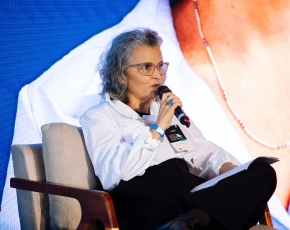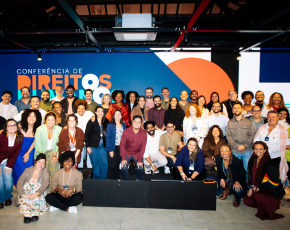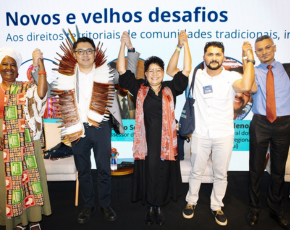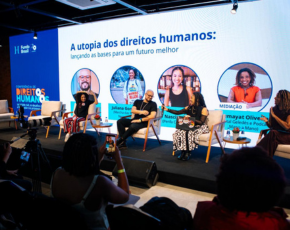



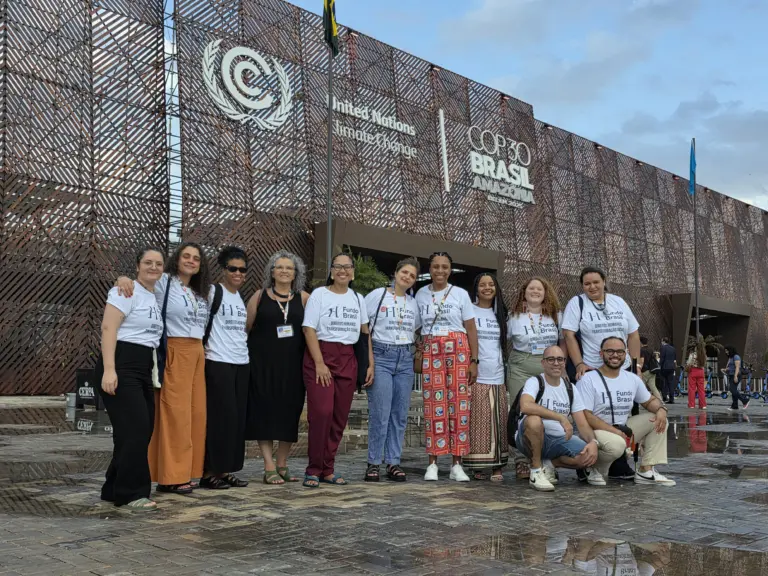
Brazil Fund’s team present in Belém for COP 30. Picture: Brazil Fund Collection
The Brazil Human Rights’ Fund took active part in the 30th Conference of the Parts, COP 30, realized in the city of Belém, capital of Pará, in the Amazon. Between November 10 and 20, we organized panels, roundtable conversations, and networking events, sheared knowledge in activities mobilized by distinct civil society actors, watched lectures, took part in strategic meetings, and accompanied the fight and advocacy of social movements and human rights defense collectives supported in our programs aimed towards the strengthening of local climate solutions.
Strengthening local knowledge and solutions is a strategic path to accelerate the necessary adaptions for tackling the climate crisis. For the Brazil Fund, this tackling – central debate of the COPs, the UN’s climate conferences – needs to be done from the perspective of ensuring human rights and overcoming structural inequalities.
Global South philanthropies, such as the Brazil Fund, play a crucial role in the flow of resources for the promotion of climate justice and a transition that is truly just. With knowledge of the territories and experience consolidated in de-bureaucratizing processes and in establishing networks and trust-based relations with distinct social actors, this philanthropy propels lasting results and helps transform structures and strengthen civil society in Brazil and the Global South, mobilizing resources that bolster local climate solutions.
Thirteen people of our team were present in Belém, both in the COP 30’s official spaces as well as in the many parallel events. We set the agenda and talked about the protagonism of Indigenous peoples, local communities, the Afro-descendant and quilombola population’s workers of the waters, forests, countryside and cities in the debate and in local and global solutions about the climate.
The Global South House
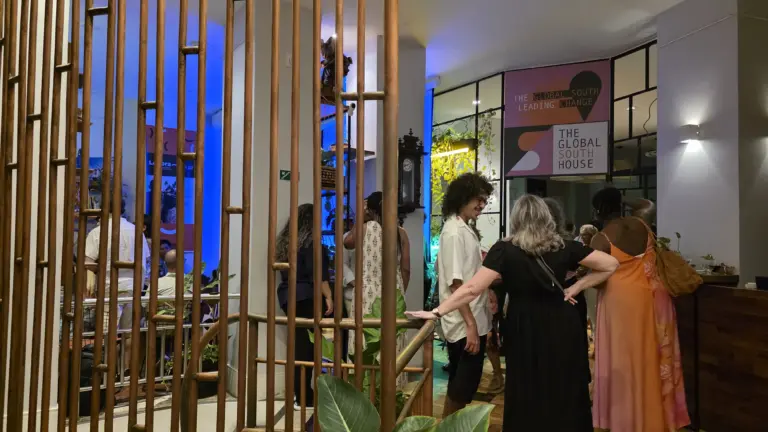
Global South House inaugurated its space in Belém promoting debates about the flows of funding for initiatives of promotion of climate justice in the Global South. Picture: Mônica Nóbrega/ Brazil Fund Collection
Central to our participation was the construction of the Global South House, a platform of political articulation, mobilization, knowledge production, and collaboration between philanthropy actors of the Global South. Its purpose is to influence the flow of resources and power dynamics in favor of socioenvironmental justice, advocating for local solutions in the core of global conversations about funding for climate and nature.
It’s an undertaking by the Comuá Network, that the Brazil Human Rights Fund takes part in, and the Fondos del Sur Socioenvironmental Alliance which, together, gather dozens of independent local organizations dedicated to the philanthropy of socioenvironmental justice located in Latin America, Africa, and Southeast Asia. In Belém, the Community Fund Network of the Brazilian Amazon and the international movement #ShiftthePower signed the project as co-promoters.
The Global South House had its first in-person edition during COP 30 in Belém.
In this space, the Brazil Fund promoted five activities.
– Three years of Labora: celebration, connections and the future of decent work
In the 13th, Labora gathered over 100 people to celebrate three years of acting in defense of decent work. Its was a night of meetings between popular movements, supported organizations, and partners of international philanthropy.
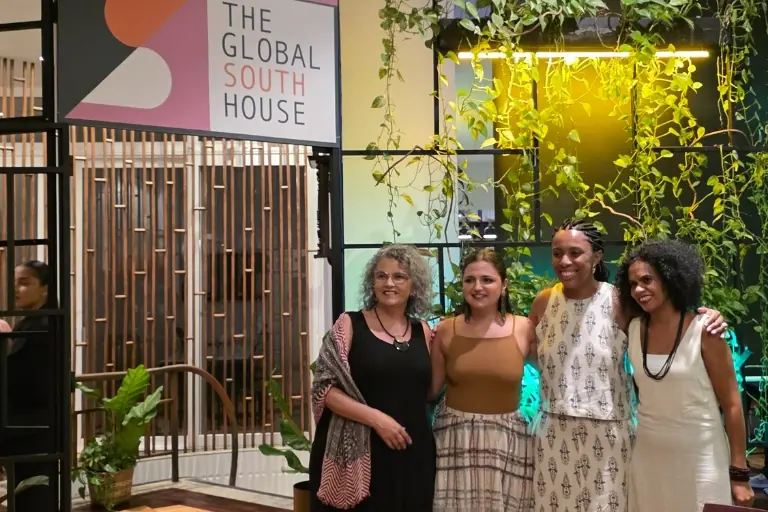
Ana Valéria Araújo, Amanda Camargo, Dayana Souza and Gislene Aniceto, during the Labora Fund for Decent Work’s third anniversary cocktail. Picture: Brazil Fund Collection
The celebration was also a space for reflection: the exclusive exhibition of the documentary Daqui pra frente é nós opened a conversation about labor, human rights, and just transition. The documentary’s premiere on digital platforms is foreseen for 2026. The themes connect labor rights and social protection to the climate challenges. See the records of this gathering.
– Panel “Collaborative arrangements to ground the climate funding in the territories”
As for the 14th, Raízes promoted a debate about how alliances between funds and community organizations in the Global South are creating more just paths towards climate funding. The panel showed that solutions already exist in the territories. According to the participants, the challenge is to make the resources reach those who protect the land. The panel confirmed: collaboration is a strategy, method, and paradigm shift. See the records of this gathering.
– Panel “Climate Justice and Defenders: Funding for the Protection of Life and the Territories”
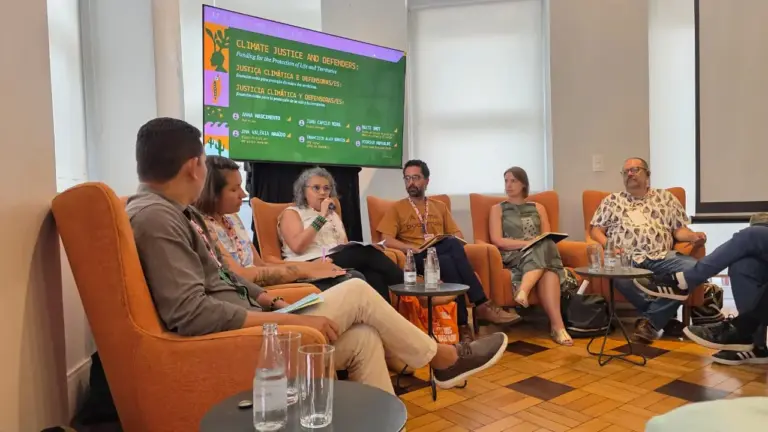
Francisco Alan Santos, Maite Smet, Ana Valéria Araújo, Rodrigo Montaldi, Anna Nascimento and Juan Camilo Mira, during a panel in the Global South House. Credits: Sofia Hage – Ventos do Norte
In the 17th, the debate exposed a severe reality: the Global South concentrated the highest rates of violence against environmental and human rights defenders. Invited by the Casa Socioambiental Fund, the Brazil Fund presented its protection methodology based in emergency support, continuous presence in the territories, and strengthening of a culture of comprehensive security. The consensus among the participants: territorial security demands faster and flexible funding models, led by those who live the reality of threats in day-to-day life. See the records of this gathering and the statement of the Brazil Fund’s Projects’ Advisor, Alexandre Pacheco.
The panel and Brazil Fund’s work in the protection of human and environmental rights defenders was noticed in a detailed article by InfoAmazônia about the challenges faced by environmental defenders in the Global South.
– Panel “Building a just ecological transition: agroecology led by workers and communities”
On Tuesday (18), the panel “Building a just ecological transition”, led by the Labora Fund for Decent Work gathered organizations from Brazil, Latin America, Asia, and the Legal Amazon to defend that strengthening community initiatives of agroecology and agroforests is fundamental as a nature-based climate solution. The practices conducted by local peoples, family farmers, women, and rural youths already offer effective responses to the climate crisis, protecting biomes and ensuring income and food sovereignty, but still deal with low visibility and a lack of funding. See the records of this panel.
– Two years of Raízes: celebration, protagonism, and concrete results
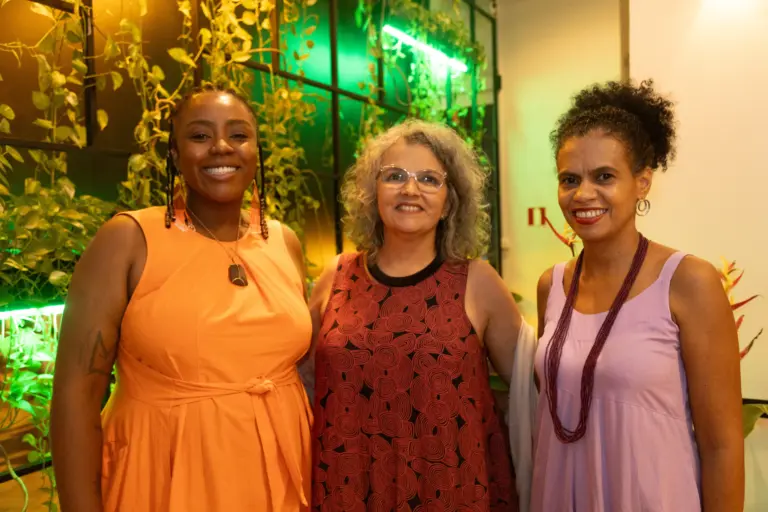
Allyne Andrade, deputy executive director; Ana Valéria Araújo, executive director; and Gislene Aniceto, general manager; during the Raízes second anniversary cocktail. Picture: Brazil Fund Collection
The Brazil Fund celebrated two years of Raízes in a night of meeting between philanthropy partners, social movements, and representatives of peoples and communities from the entire country. The numbers presented are surprising: R$5,9 million (circa 1 million USD) destined towards 160 initiatives led by Indigenous peoples, quilombolas, and local communities. The stories presented in a minidocumentary show what local peoples and communities have been building with support from Raízes. Check out the records of the Cocktail.
In COP30, the Brazil Fund was present in different debates and mobilizations, reinforcing the protagonism of Indigenous peoples, Black women, grassroots organizations, and local communities in the solutions to the territories’ challenges.
In all spaces, we reiterate that climate justice and just transition are human rights causes, and essential for the guarantee of social justice. Up ahead, the main moments of our participation.
People’s Summit
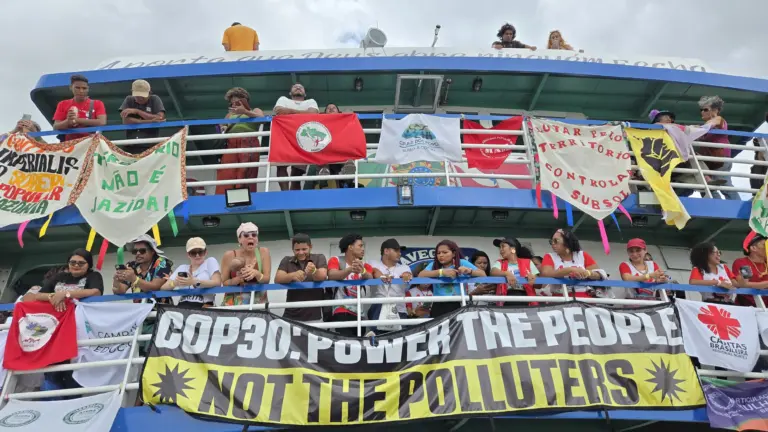
Boat parade gathered over 5 thousand activists from 62 countries, in over 200 boats. Picure: Mariana Costa/Brazil Fund Collection
The Brazil Human Rights Fund has granted R$ 3,8 million (circa 760,000 USD) to enable the realization of the Peoples’ Summit and popular participation in COP 30. The activities took to Belém over 10 thousand activists from grassroots organizations throughout the country, members of about 1,1 thousand collectives and social movements.
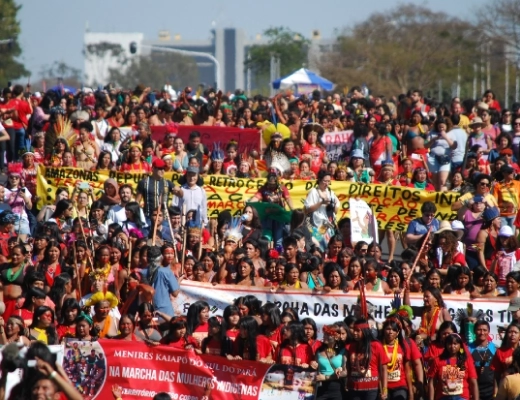
With a programming that includes a boat parade, plenary sessions, cultural activities, fairs, banquets, and a march through the streets of Belém, the People’s Summit was the largest climate popular mobilization undertaken during COP 30. From November 12 to 16, as governments and diplomatic teams gathered in the Blue Zone with limited access, social movements were debating the planet’s future in spaces spread over Pará’s capital.
In the final balance, the People’s Summit registered a public of 25 thousand accredited people, representatives from 65 countries.
The Peoples’ Summit’s relevancy for the climate debate happening in Belém during COP 30 became even more evident in the closing plenary session, which received ambassador André Corrêa do Lago, president of COP 30, and Ana Toni, CEO of the conference. It also had a massive presence from the Brazilian government, with ministers Sônia Guajajara, of Indigenous Peoples; Marina Silva, of Environment and Climate Change; and minister Guilherme Boulos, of the Presidency’s General Secretariat.
The Brazil Fund accompanied a large part of the Peoples’ Summit activities.
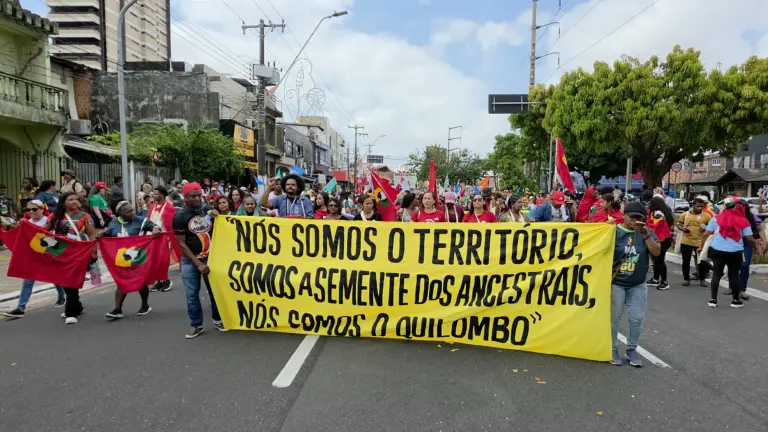
Our team took part in the march that gathered over 70 thousand people in defense of a just energy transition, in defense of the lands, and the forests. Picture: Mariana Costa/ Brazil Fund Collection
The Brazil Fund accompanied the boat parade that gathered 5 thousand activists from 62 countries in over 200 boats, that crossed more than 8 kilometers through River Guamá and the Bay of Guajará to affirm popular protagonism in climate justice.
– Global March for the Climate
Our team took part in the march that gathered over 70 thousand peoples, social movements, internationalists, and authorities, in defense of a just energy transition, in defense of the lands, forests, and those who care for them. It was the largest popular march undertaken in Belém during COP 30.
We accompanied the CUT Pará Hearings, an action supported by Labora that gathers workers to formulate proposals for just transition towards COP 30.
Climate philanthropy, decent work, Indigenous peoples, and Afro-descendant population
Connections for climate justice
The Brazil Fund took part in the roundtable conversation “Creating Connections, Sharing Stories”, in the People’s COP House, in a meeting that brought together backers, social movements, and grassroots organizations in defense of the territories and climate justice.
Thainá Mamede, from the Brazil Fund team, took part in the International Panel “Funding the Movement of Indigenous School Education to Stall the End of the World”. Picture: Brazil Fund Collection
Panel about Slave Labor and Climate Change
Labora took part in the roundtable conversation of the Pastoral Land Commission about slave labor and climate crisis, reinforcing the support to initiatives that strengthen rights and climate justice in the Amazon.
Upon invitation from the National Forum of Indigenous School Education (FNEEI), we took part in the International Panel “Funding the Movement of Indigenous School Education to Stall the End of the World”, in the afternoon of November 15th, during the VIII National Gathering of Indigenous School Education (VIII FNEEI).
Global Indigenous Peoples’ March
The Brazil Fund accompanied the Global Indigenous Peoples’ March in COP30, which took Apib’s message to the streets of Belém: protecting and demarcating territories is central to tackling the climate crisis.
Indigenous Climate Justice: documentaries as fighting instruments
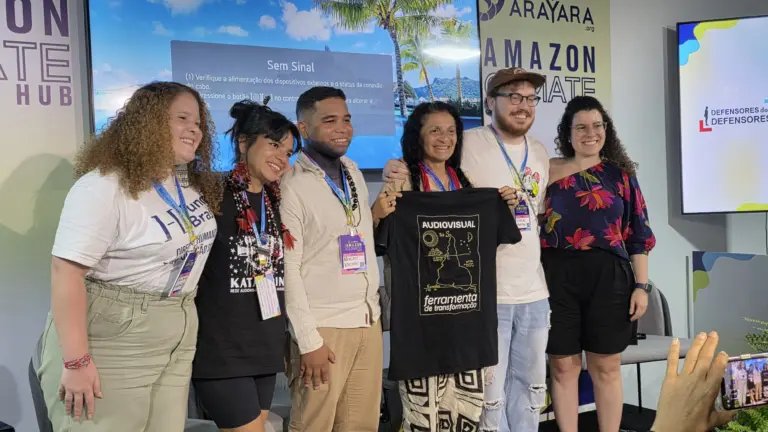
In the Amazon Climate Hub, the Brazil Fund took part in the panel “Indigenous Climate Justice: documentaries as fighting instruments”. From the exhibition of a part of the documentary “Sete Salões: O Último Parente do Povo Krenak”, which counted with the Brazil Fund’s support through the Rio Doce Basin call for proposal and with resources for mobilization from Raízes, the guests promoted a debate about how movies and visual narratives strengthen the defense of the territories and the struggle for climate justice, and the importance of thinking about cinema as a community transformative tool.
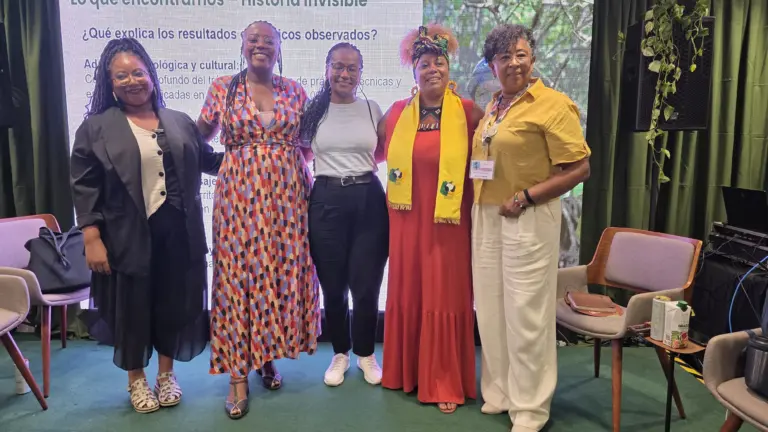
Allyne Andrade, the Brazil Fund’s deputy executive director, during participation in the “Afro-descendant women for climate justice” panel. Picture: Brazil Fund Collection
Afro-descendant women for climate justice panel
In the Pará Pavillion, the Brazil Fund took part in the “Afro-descendant women for climate justice” panel, reinforcing the centrality of Black women to climate adaptation and reflecting about how the funding reaches the territories to boost their actions.
In the COP30 article: a call for support to local climate solutions, published in Um Só Planeta, the Brazil Fund and partners of the Comuá Network defend more resources and autonomy for those who create climate solutions in the territories, despite the global backsliding of philanthropy.