






Photos: Pitombeira Quilombola Community Association
In Várzea, a municipality in the state of Paraíba, residents have always lived alongside the Caatinga biome, despite its recurring periods of drought. But climate change has intensified the challenges of the semi-arid region. Rainfall has become even more unpredictable, while water shortages have reduced local biodiversity. Bee populations have declined, and bean and corn production is no longer enough to sustain families, who have begun buying in town what they once produced themselves.
In response to these impacts, the Pitombeira Quilombola (quilombos are traditional communities formed by descendants of escaped enslaved people) Community Association began looking for ways to adapt.
The Association is supported by Brazil Fund through the Strengthening Solutions by Indigenous Peoples, Traditional Communities and Workers toward Climate Justice and a Just Transition call for proposals.
The call is a collaboration between two Brazil Fund special initiatives: Raízes – Indigenous Peoples and Local Communities Fund for Climate Justice, and Labora – Fund for Decent Work. The public call supports organizations working to address the impacts of the climate crisis and develop more sustainable ways of producing and generating income.
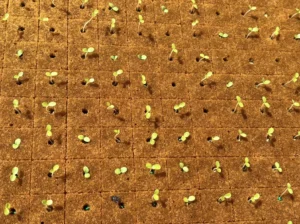
The solution developed by the Association promises to combine innovation and tradition. The idea is to strengthen the bioeconomy by producing and generating income from nature while valuing traditional knowledge. In the community, this work involves using native Caatinga plants and heirloom seeds.
|
WHAT IS THE BIOECONOMY?The bioeconomy is a sustainable production model that promotes regenerative agriculture and technological innovation. It combines biodiversity conservation with the recognition and appreciation of the knowledge of traditional communities. Its goal is to build a fair, ethical, and inclusive value chain. |
Photos: Pitombeira Quilombola Community Association
Impacts on the territory required adaptation
According to Zuila Santos, president of the Association, prolonged droughts caused by climate change had already been making cultivation more difficult and reducing local biodiversity. With the installation of solar power plants near the community, the situation has worsened: “The impact is huge. When rain falls, it doesn’t penetrate the soil; instead, it flows directly into the river. Then there are the temperatures. The plants in our region dry out much faster because of the hot, dry wind coming from the solar panels.”
In addition to these impacts, rainfall carries waste into the river. This was one of the reasons the community decided to implement riverbank reforestation efforts in an attempt to contain the mud.
Building a community nursery
Photos: Pitombeira Quilombola Community Association
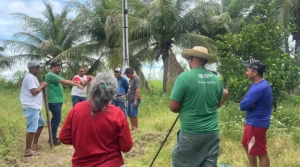
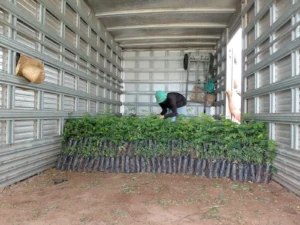
To restore degraded areas and protect riverbeds, 30 families began growing seedlings of native Caatinga species, such as umbuzeiro, juazeiro, and baraúna trees.
In total, 200 seedlings were distributed, along with guidance on planting, irrigation, and management.
Just months after the initiative was implemented, positive effects are already visible: there is less erosion and greater moisture retention in the soil.
A visit to Teixeira sparked an exchange of knowledge
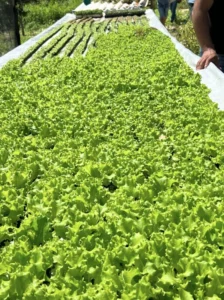
Support from Brazil Fund made it possible for community members to travel to Teixeira, a neighboring municipality. In mid-April 2026, they rented a bus to visit a property that grows vegetables using hydroponics. There, participants learned about the greenhouse system.
The experience inspired them to implement a similar system on a smaller scale as a pilot, reducing the risk of significant losses in the event of improper management or pest infestations. “It was very important to learn from the project because doing something ourselves is one thing, but not knowing what the future results will be is another. There, we saw that it works. It delivers much better results than growing in soil,” Zuila says, reflecting on the trip.
Implementing regenerative agriculture
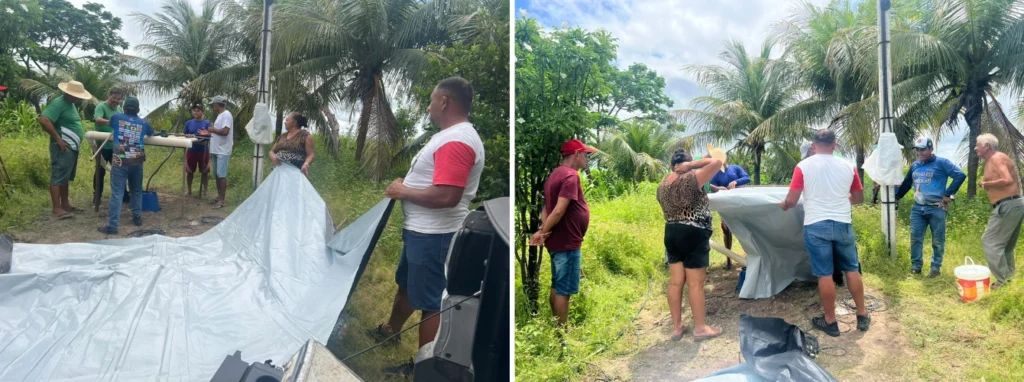
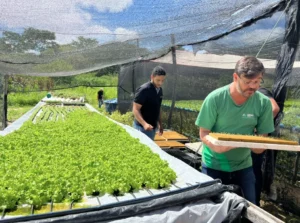
Hydroponics is new to the territory and was chosen after assessments showed that the soil was not suitable for traditional vegetable gardens. “In our yards, growing directly in the soil didn’t work. Through a workshop, we learned that hydroponics uses very little water. And the savings are much greater,” she explains. They realized that innovating their cultivation methods could be more viable, both economically and environmentally.
Photos: Pitombeira Quilombola Community Association
“Our vegetation is mostly jurema because the soil is poor. We used to blame the jurema. But it grows to help restore and strengthen the soil. Through the training courses, we began to learn that we need to have a protected area so that our subsoil can also retain water,” Zuila explains. Photos: Pitombeira Quilombola Community Association
Of the approximately 250 people living in the community, 178 have already participated, directly or indirectly, in the project’s activities.
Women make up the majority of those leading many of the activities and help keep quilombola knowledge alive, while young people learn from their elders how to care for
Photos: Pitombeira Quilombola Community Association
the territory, preserving tradition.
Moving toward climate justice
Even at an early stage, vegetable production is already strengthening the community’s food security. Families now have a more diverse diet and no longer depend on buying produce at the town market.
The first results have already shown the initiative’s potential, but Zuila believes its impact will be even greater with the next harvests. “We’re super excited. And when I say ‘we,’ I mean the group, the community. The management is quick, and we can harvest the produce in less than a month,” she says.
The community now hopes to expand production, invest in a larger hydroponic greenhouse, share its techniques with other quilombola communities, and sell surplus produce at local markets.
The Association
Photos: Pitombeira Quilombola Community Association
The Pitombeira Quilombola Community Association is made up predominantly of Black quilombola women, who play leadership roles in the community and are actively involved in political advocacy, social mobilization, and organizing collective activities. The Association also welcomes young people — valuing intergenerational exchange — and the diversity of gender and sexual identities and expressions.
Through training, sustainable practices, and the appreciation of traditional knowledge, the Association seeks to promote autonomy, collective awareness, and climate justice, and, above all, to strengthen quilombola identity and the community’s struggle for their territorial and environmental rights.