
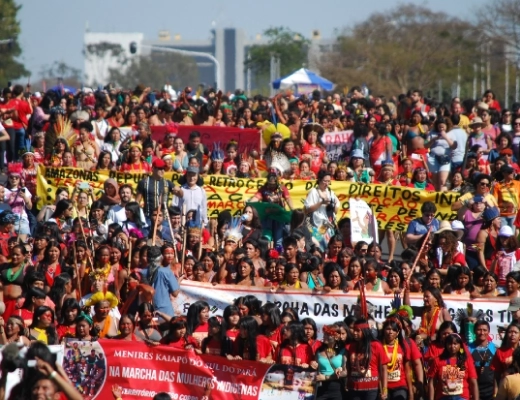





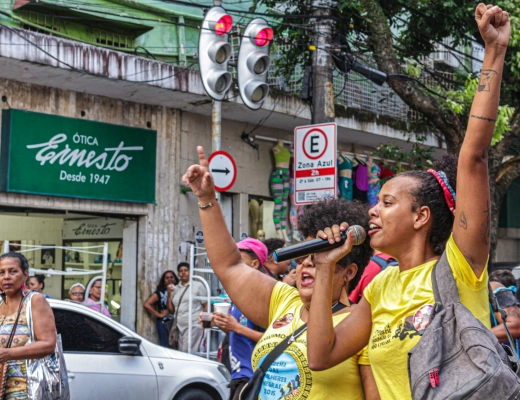
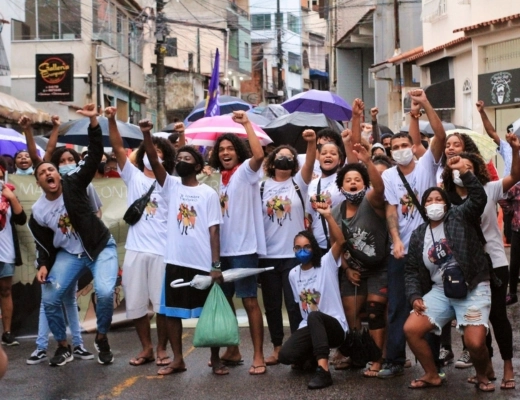
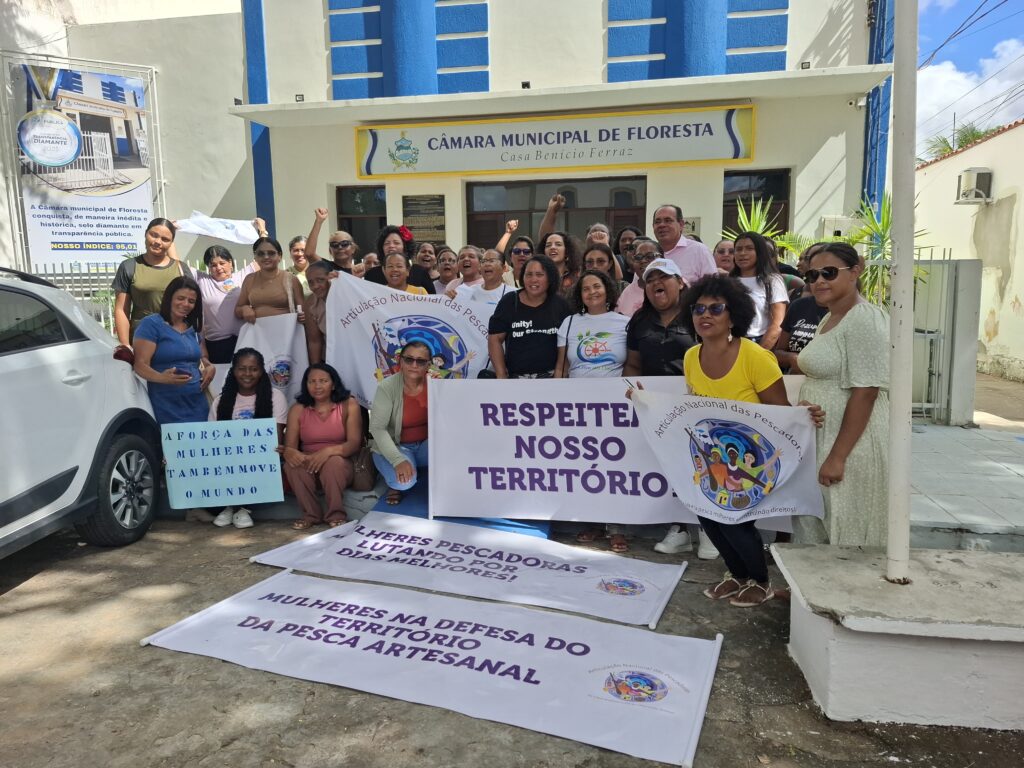
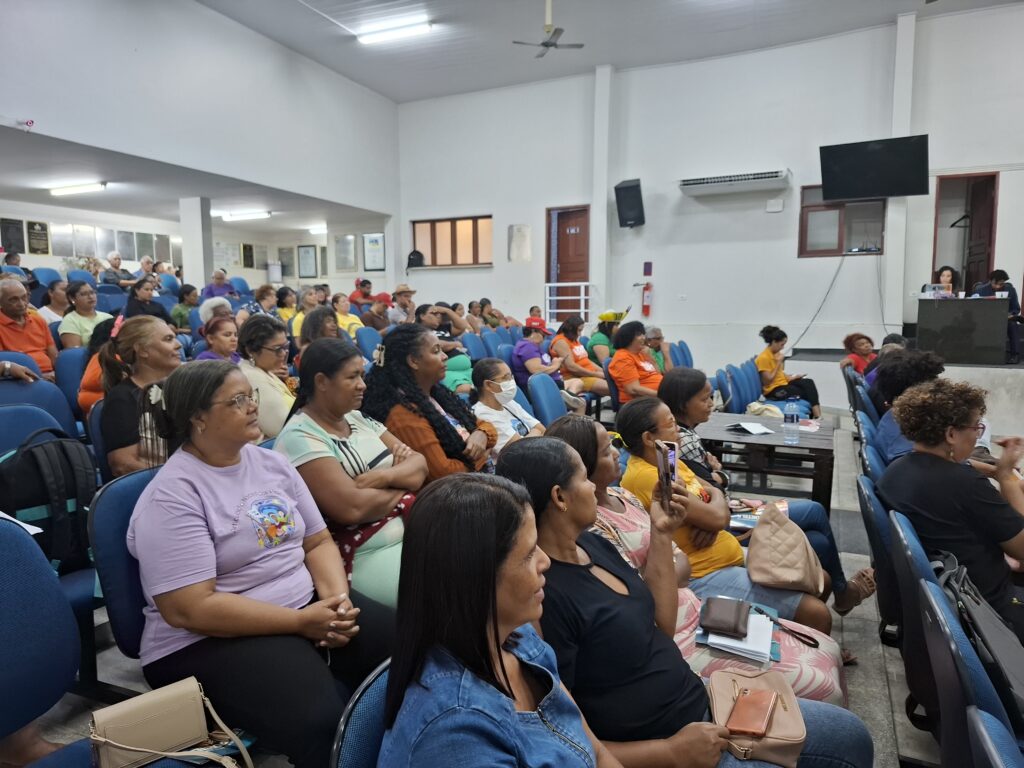
The voices of women that echoed in the march through the streets of Floresta, in inland Pernambuco, scathingly shouted the urgent demands and urges for decent life and work. Coming from nearby towns and cities of the Metropolitan Region of Recife, about 50 fisherwomen, as well as entities, movements, and supporting organizations, were present in the inland municipality’s Town Council in order to discuss the problems that harm directly the work undertaken by many hands, especially female hands, and that isn’t restricted to the coastal region of the state: small-scale fishing.
The installation of wind-energy parks, pollution of the São Francisco River due to the pisciculture industry, among other questions that negatively affect them were approached in a Public Hearing taking place in the morning of April 29th. The mobilization and realization of the hearing is part of the project supported by the Labora Fund for Decent Work, an initiative by the Brazil Human Rights Fund through the Strengthening Informal Workers in the Fight for Rights 2025 Call for Proposal.
The choice of realizing a public hearing about a fishing activity in inland Pernambuco wasn’t by chance. The activities of small-scale fisherwomen aren’t limited to the coast, but also take place in the regions crossed by the São Francisco River, the cradle of species of fish that are sources of food and income to families that live on their banks. The town of Floresta, located on that region, about 430km from Recife, is one of those locations.
The meeting started in the town streets, a few kilometers away from the Town Council, during a march holding signs with slogans and distributing flyers with more detailed information about what was being defended. After all, the discussion about the life, work, and well-being of small-scale fisherwomen isn’t just restricted to them. It’s a question for all society.
Maria da Guia, one of the leaders of the fisherwomen’s movement and secretary of Floresta’s fisherwomen colony, explains the importance of bringing the specific agendas of women in the work of small-scale fishing. “Men can go out and undertake their fishing activities in São Francisco or other places, even other states. But women don’t have that condition of going out because they are housewives, there are the children they need to care for. We have examples of women who lost their rights to benefits because INSS (Brazilian social security) claimed that, with the scarcity of water, they weren’t living off fishing and couldn’t leave their lands to fish somewhere else”, she denounced.
The public hearing counted with the presence of other civil society entities such as SOS Corpo – Feminist Institute for Democracy, FASE, Pastoral Fishing Commission (CPP), and movements such as the Black Women’s Network, the Women’s Forum of Pernambuco, and the Landless Workers’ Movement (MST).
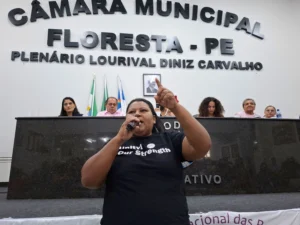
Noemia Fernandes, fisherwoman in Ilha de Deus, Recife, during public hearing. Picture: Ana Roberta Amorim/Brazil Fund Collection
Fisherwomen’s claims
As Joana Mousinho, leader of the movement and first elected president of a fisher colony in Brazil (in 1988, in the town of Itapissuma, northern coast of Pernambuco) reports, the damages caused affect not only the work itself, but the health and well-being of the fisherwomen. “We know the situation is very difficult. Not only the enterprises harm fisherwomen. Pollution is also a factor of great defeat in those women’s lives. Of course it also affects the health of men, but women suffer even more from working with the body immersed in the water, becoming victims of many kinds of disease”, she told.
For Maria da Guia, one of the main problems faced by the fisher population is being ignored in consultations for the installation of enterprises that directly affect the lives of that group. “I know the advance of pisciculture in regions where there are local fishing communities who weren’t heard. There are also wind-energy plants that are advancing upon our municipalities, and we barely have the knowledge of how these advancements and processes are. We have the right of being consulted”, she affirmed.
Da Guia, as she’s known, brought to the table more questions that need to be debated and problematized considering the gaze and lived experience of small-scale fisherwomen, such as the transposition of the São Francisco River.
Those demands are among the first ones cited in the Socioenvironmental Conflicts and Human Rights Violations in Local Fishing Communities in Brazil report, realized by the Pastoral Fishers’ Council (CPP) in 2024. Analyzing 16 states, among them Pernambuco, the document presents important data about the violation of rights and losses in relation to the impact of the energetic transition in fishing communities, imposition of displacements, deforestation as an instrument of invasion of the lands, and the sexual division of labor, among other issues.
About the presence of women in small-scale fishing, the report points out that, of the little over 1 million names of fishers in the General Register of Fishing Activity – SISRGP (MPA, 2023), 507.896 are women, that is, 49%. In Pernambuco, they are the majority.
However, even in a numerically favorable scenario, conflicts aren’t lesser or easier. As the report highlights, “as well as the impacts on nature and, consequently, on the reproduction and renovation of fishery resources, these installations affect the lives of fishing women in several ways: in the lack or difficulty of access to fishing locations, accompanied by the loss of security in movement through their own territory – and here it’s important to remember that many are accompanied by children; sickness arising from the exposure to contaminating agents in the waters such as pesticides, mercury and others; difficulty in the institutional acknowledgement of them as fishing professionals and; absence of specific public policies that lessen the impacts of suffered violences”, it explained.
Comprising the bench in the public hearing were instances of public power, including the Ministry of Fishing and Aquiculture, the Ministry of Agrarian Development and Family Agriculture, and the National Institute for Colonization and Agrarian Reform (INCRA). Also took part representatives of the Pernambuco Public Prosecutor’s Office and of Fiocruz Pernambuco.
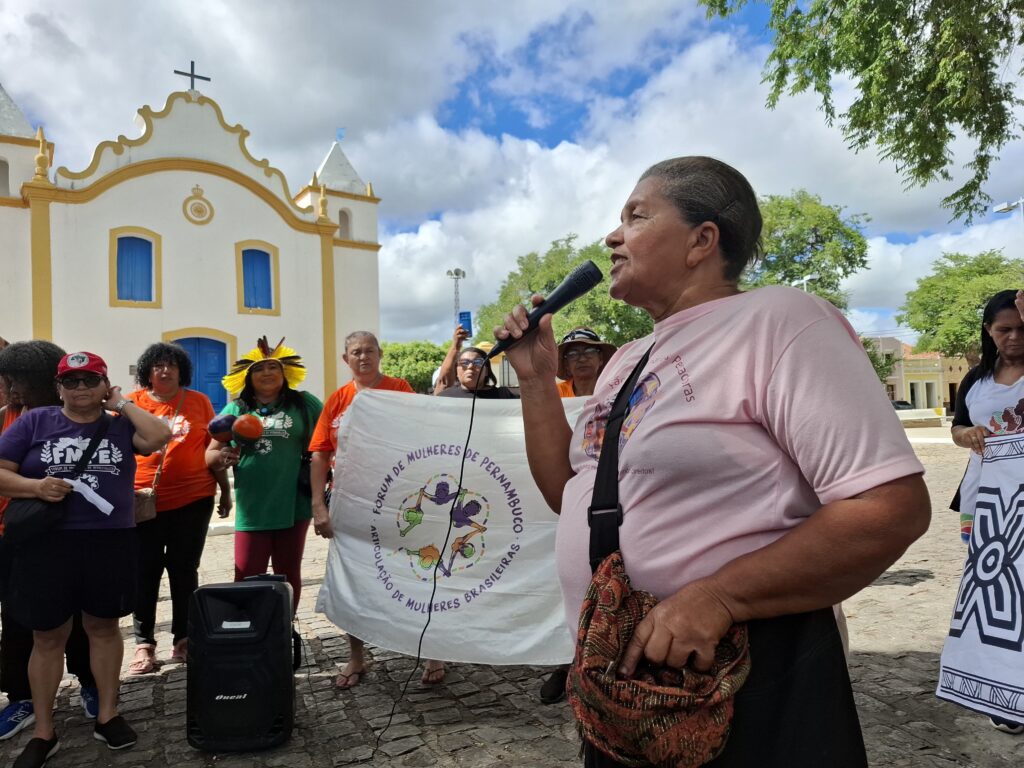
Picture: Ana Roberta Amorim/Brazil Fund Collection
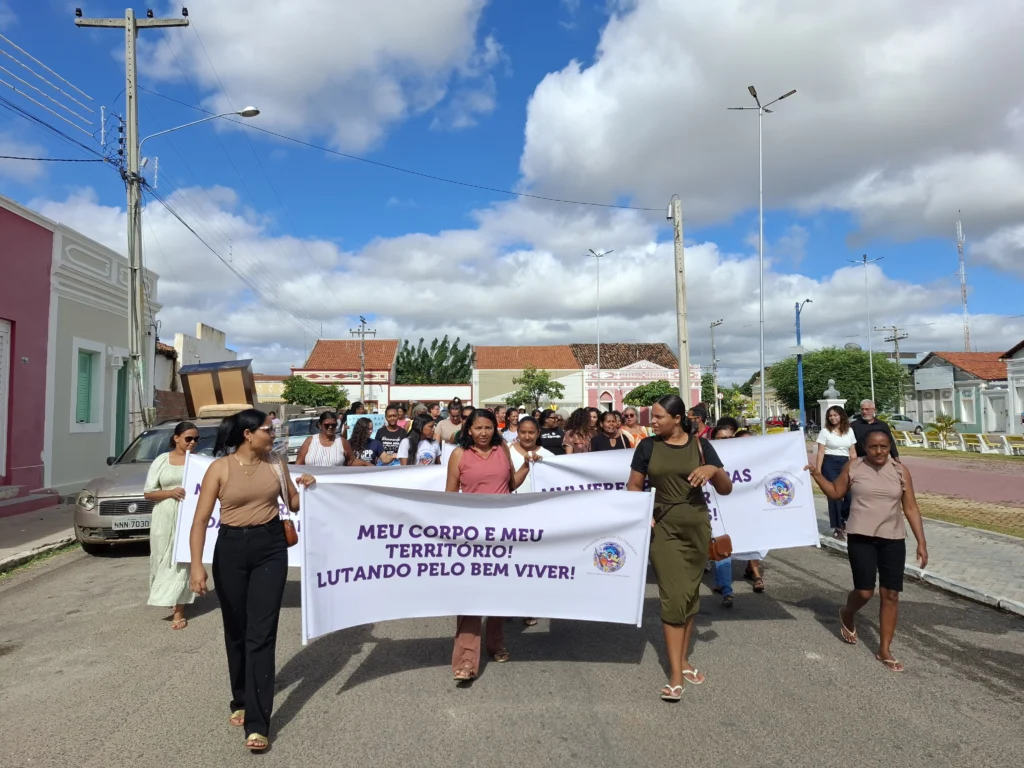
Fisherwomen on march. Picture: Ana Roberta Amorim/Brazil Fund Collection
Picture: Ana Roberta Amorim/Brazil Fund Collectio
Announcement of public policy was done in the hearing
The Ministry of Agrarian Development and Family Agriculture announced the acknowledgement of fishing communities within the policy of agrarian reform. Decree 1.785, from April 23rd 2026, creates the Agroextractive Fishing Project in Pernambuco, which will authorize the Superintendency to begin the process of including fishers in the agrarian reform policy. That means those people will have the right to an initial support, to credit from INCRA, to Minha Casa, Minha Vida, and to the National Program of Environmental Education (ProNEA), according to Caetano de Carli, representative of the organ in the State.
Research exposes harms to the health of the communities caused by the wind-energy parks
The researcher of Fiocruz Pernambuco, Andresa Lira, brought the data of the Vulnerabilization Processes and the socioenvironmental conflicts arising from the implementation and operation of wind-energy parks in peasant communities of the Pernambuco southern agreste research. The survey analyzes, from the town of Caetés, in the state’s southern agreste, the impact of these buildings in the health of populations such as the small-scale fishers. It’s a partnership between Fiocruz Pernambuco and the University of Pernambuco (UPE), campus Garanhuns.
In 33 homes surveyed and 83 wind-energy towers mapped, it arrived on the result that among the most reoccurring health problems among the residents are the loss of sleep quality (75%), insomnia (72,7%), irritation to the eyes (68,2%), alteration of hearing acuity (54%) and visual discomfort with the shadows of the towers (31%). Mental sickening was noticed with stress (77,3%), anxiety (63,6%), as well as reports of depression, irritability, and lack of will to live. All that was caused by the daily and inescapable coexistence with the noise and trepidation of the air-generators.
The quotes of the fisherwomen highlight the plural nature of the fight
Josefa Guilmar dos Santos Bezerra, small-scale fisherwoman of the Folha Miúda Community, in Floresta, highlighted that solving those issues, especially the pollution, is a matter of survival for the fisherwomen and their families.
From Ilha de Deus, in Recife, Noemia Fernandes drew attention to the lack of valuing of the profession. “Unfortunately, we live in a world in which many people don’t recognize our work. Often, we want wings to fly or fins to swim, but can’t find clean water”, she lamented.
Iracir Maliof the Xucuru people of Ororubá, located in the municipality of Pesqueira, Pernambuco semiarid, questioned: “Nature yells! Where’s the fish? Where’s the bath? That hurts. The Indigenous woman, the fisherwoman, she suffers every day”.
For Maria da Guia, on a final evaluation of the hearing, was the certainty that the fight can’t stop and that it’s necessary for fishermen and fisherwomen to unite around the cause.
As final referrals, were defined demands to the organs responsible for more concrete responses to the requests and denouncements done during the hearing. The Federal Prosecution Service affirmed there’s an open investigation on the large pisciculture and wind-energy enterprises.
Moreover, a working group (GT) gathering public power and civil society (with fisherwomen, fishermen, social movements, and others) was suggested to organize demands and collective monitoring on the matter.