


The climate crisis is intrinsically linked to historical forms of violence based on gender, race, and class—a legacy of centuries of colonialism and exploitation. In this context, rich countries are historically indebted to the Global South, which will not see reductions in violence through mitigation measures alone. We need comprehensive action and a much broader approach.
This article was originally published in Nexo – follow the link to read it in Portuguese.
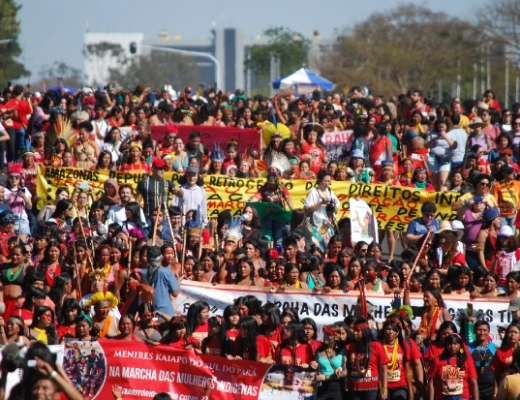
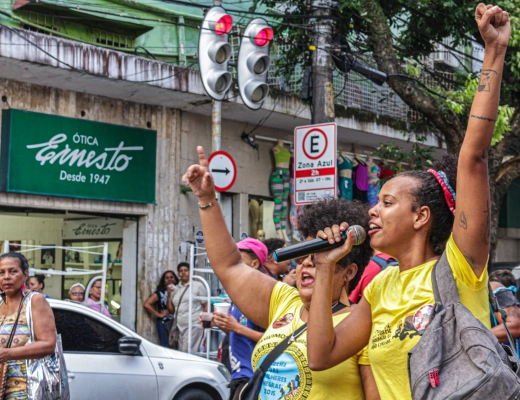
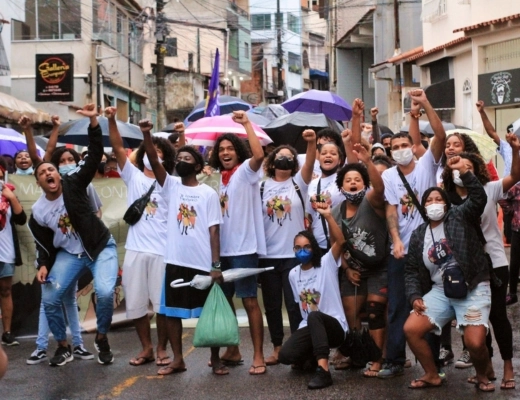
The world’s marginalized bear the brunt of this crisis. Traditional, indigenous, quilombola, riverside, and urban marginalized communities are among those most affected by climate change. These groups are also undoubtedly the primary protectors of biomes and natural resources. These communities are home to people who dedicate their lives to defending the environment, often exposing themselves to extreme risks and threats in an effort to protect their lands, communities, and ways of life.

The facts and figures are well-known: those who defend human and environmental rights in Brazil are threatened and murdered. In a mapping published in June 2023, Terra de Direitos and Justiça Global identified 1,171 incidents of violence against activists between 2019 and 2022, including 169 murders and 579 threats. Almost half of the cases (47%) took place within the boundaries of Brazil’s Legal Amazon.
Amnesty International’s annual report listed Brazil as the country with the fourth highest number of murders of human rights and environmental defenders. Some of the most emblematic cases include the murders of indigenous rights activist Bruno Pereira and British journalist Dom Phillips in June 2022; the 2019 murder of Paulo Paulino Guajajara, an indigenous man; and the 2023 murder of quilombola and spiritual leader Maria Bernadete Pacífico, known as Mother Bernadete, in the Pitanga dos Palmares Quilombo, in the Simões Filho municipality in Bahia.
An organized civil society is fundamental for a strong democracy. However, democracy will not come to fruition if activists who organize to defend fundamental rights face threats to their lives and well-being due to their role in the larger public debate.
During COP28 in 2023, following a period of climate denialism, Brazil sought to position itself once again as a climate leader. The government doubled down on its commitment to eliminate deforestation by 2030, proposing a comprehensive plan to preserve forests. It has, however, avoided commitments to reduce oil and gas investments, evidenced by its decision to join OPEC+ and by its approval of new oil and gas blocks in the Amazon for drilling.
At the same time, the country is negotiating the production and export of green hydrogen to European countries, involving billions in investments and spurring a large-scale and rapid expansion of wind and solar farms. In practice, however, what we are seeing is nowhere near a just, people-centered, and inclusive transition that is duly respectful of local communities. There have been many reports of threats to communities and their traditional ways of life amid the expansion of renewables, especially in the Northeast.
All in all, despite the current government’s green rhetoric, the outlook for reducing violence against environmental advocates in Brazil is not encouraging.
Faced with these challenges, national philanthropic organizations have been working together to find ways to safeguard the lives of human and environmental rights defenders. In order to tackle this complex problem, organizations such as the Brazil Human Rights Fund and the Casa Socio-Environmental Fund have established networks and deep ties with local and regional institutions over the last few decades, particularly in the Amazon and Matopiba regions.
The community and socio-environmental justice philanthropy practiced by these organizations is carried out by actively listening to local advocates and organizations and then providing rapid response emergency support for critical situations, such as imminent threats to life.
In addition to emergency support, the organizations participate in working groups to discuss the protection of advocates, share experiences, and refine strategies to put an end to the violence. Requests for support are quickly analyzed. The funds donated can be used to temporarily relocate a threatened person; to provide legal and psychological assistance; or to install security equipment, among other measures.
In September 2023, during Transformative Philanthropy Month (a Comuá Network initiative) the Brazil Fund and Casa Fund hosted an event on the role of emergency assistance that was open to several Brazilian organizations. The general consensus of the participating organizations highlights the need to move forward in building a culture of comprehensive protection, developed by local and regional organizations working in concert, supported by philanthropy with a whole-systems approach.
Emergency mechanisms are important, but developing broader protection strategies is essential, considering the complexity of the violence and vulnerability these areas face, ranging from limited state capacity to the presence of organized crime. Given this situation, relationships based on trust and network-wide coordination are critical for ensuring the safety of organizations as well as of human rights and environmental defenders.
Violence against activists, especially indigenous and Black activists, is a reality that reflects the country’s inequality. Because forests and traditional communities are among the main targets, the protection of individuals must be linked to the protection of land.
Amid the threats faced by activists, the Brazilian state takes on a dual and contradictory role. The state is responsible for developing public policies and for implementing measures to protect both activists and the land. But the state is also guilty of violating rights: failing to demarcate indigenous and quilombola lands, prolonging and even exacerbating land disputes and conflicts over natural resources, among other failures. In order for its domestic policies to be consistent with its international statements on the protection of forests, the state must do its part by expanding protection policies.
As for civil society, combating violence against human rights and environmental defenders requires creative and long-term approaches. With risks reaching emergency levels, the philanthropic community must facilitate access to resources and strengthen ties with grassroots activism. It is also crucial to think about post-emergency support in which people under threat are safely returned to their land and able to move forward with their lives in safety.
In order to change the current situation, we must move beyond a focus on short-term crises and understand that ongoing support is fundamental. There will be no solution to the global climate crisis if the people who dedicate their lives to protecting rights are not themselves valued and protected. This is a commitment humanity must make—both for itself and for the planet.
Ana Valéria Araújo is executive director of the Brazil Human Rights Fund. She has a law degree from the Rio de Janeiro State University (UERJ) School of Law and a master’s degree in international law from American University. She specializes in indigenous rights and the protection of socio-environmental rights. She is a founding member of the Socio-Environmental Institute (ISA). She served as the executive director of the Rainforest Foundation US in New York.
Cristina Orpheo is executive director of the Casa Socio-Environmental Fund. She has a degree in business administration and has completed postgraduate studies in social project management, the nonprofit sector, and environmental management. She has 20 years of experience in project development and management, human resources management, strategic planning, and resource mobilization. She works in grantmaking and in support of grassroots community groups.
Get to know Raízes – Indigenous Peoples and Local Communities Fund for Climate Justice